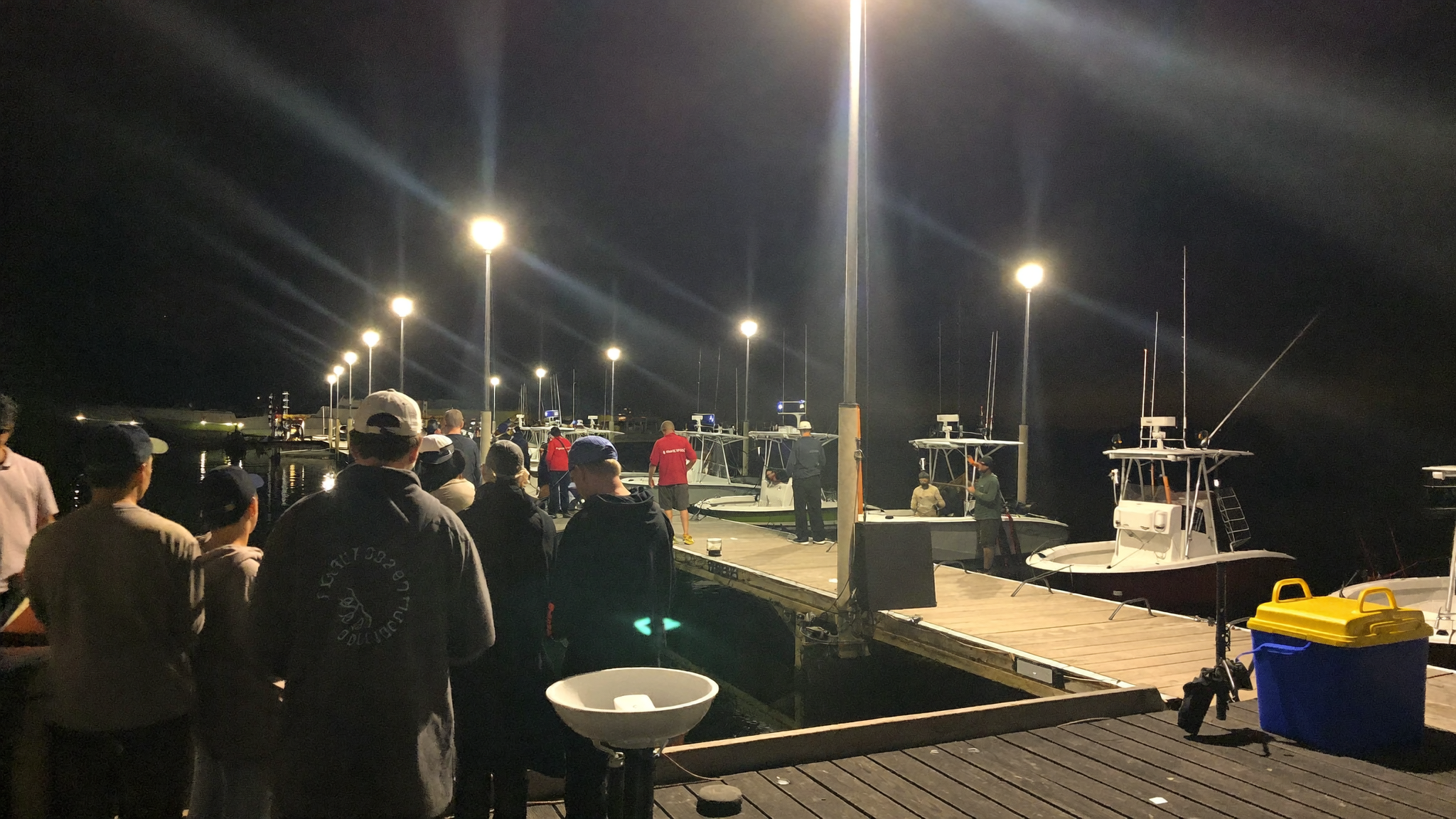
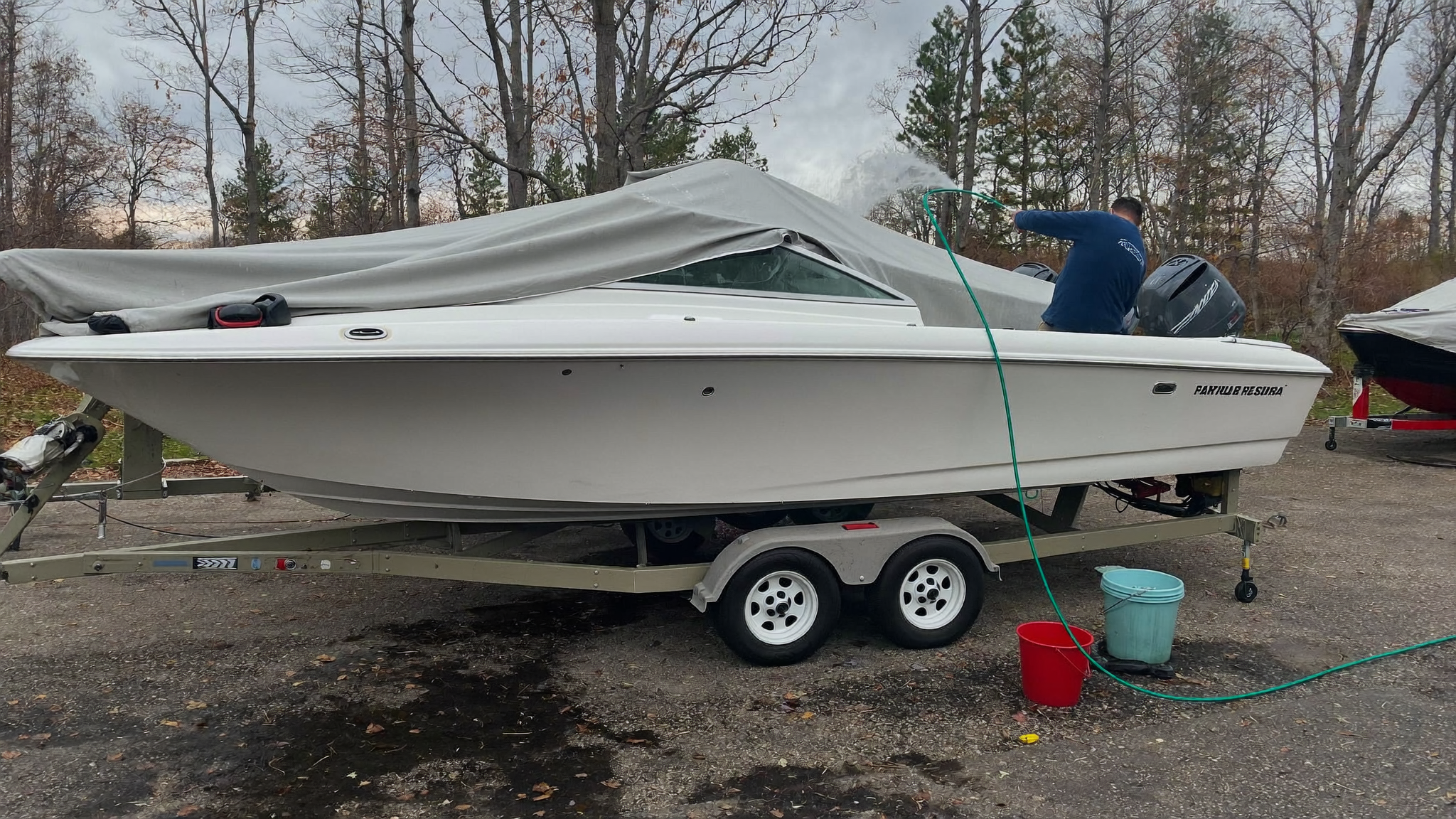
Most boat winterization checklists you find online were written for somewhere cold. They assume your lake freezes solid, your boat comes out of the water in October, and you will not see it again until May. That is not the Lowcountry.
Winter on Lake Moultrie is mild. Hard freezes happen, but they are short. Plenty of people around here fish straight through January — in fact, late fall and winter are prime trophy catfish months. So the real question is not “how do I shut everything down until spring?” It is “how do I protect my boat through a mild winter while still being able to use it?”
Here is the checklist that actually fits South Carolina.
First decide: are you storing it or still using it?
This is the fork in the road, and it changes everything that follows.
- Still using it through winter. Common around here, especially for catfish anglers. You are protecting against occasional freezes, not shutting down. Focus on freeze protection, battery health, and keeping the boat clean and covered between trips.
- Storing until spring. Full layup. Fuel treatment, fogging, stabilization, and covered or indoor storage.
Be honest with yourself. A lot of people fully winterize in October, then get a warm 68-degree Saturday in January and wish they had not. If there is a real chance you will want to fish, plan for use.
The engine: the part that actually matters
Almost every expensive winter repair traces back to water sitting somewhere it should not, then freezing.
Flush the cooling system
Run fresh water through the engine after your last few outings. Even on freshwater lakes, flushing clears sediment and organic material that can sit and corrode.
Drain everything that holds water
This is the single most important step in a mild climate. Outboards generally self-drain when stored in the fully down position — which is exactly why you should leave yours tilted down, not up. Trapped water in a lower unit that freezes even once can crack a housing, and that is not a cheap conversation.
Inboard and sterndrive owners should drain blocks, manifolds, and any raw-water plumbing, or fill the system with the correct marine antifreeze.
Change the lower unit oil
Do this now, not in spring. If the oil comes out milky or cloudy, water has gotten in past a seal. Water expands when it freezes, and finding that out in October gives you all winter to fix it cheaply. Finding out in April means your season starts with a repair bill.
Fuel and stabilizer
Fill the tank to around 90 percent to limit condensation, add a quality marine fuel stabilizer, and run the engine long enough to pull treated fuel through the entire fuel system. Ethanol-blended fuel absorbs moisture and can separate over time, which is a bigger deal in a humid climate like ours than in a dry one.
Fog the cylinders (layup only)
If the boat is going to genuinely sit for months, fogging oil coats internal engine surfaces and prevents corrosion. If you are still running it every few weeks, this step is unnecessary.
Batteries
Cold weather does not kill batteries so much as reveal the ones that were already dying.
- Clean the terminals and check for corrosion.
- Charge fully before storage. A discharged battery is far more vulnerable to freeze damage than a charged one.
- For long layups, either disconnect or put the battery on a maintainer.
- If a battery is more than four or five years old, replace it now rather than discovering the problem on a cold morning at the ramp.
Hull, deck, and interior
Humidity is the Lowcountry’s real winter enemy — not ice. Mildew grows here in December.
- Wash and wax the hull. A coat of wax protects gelcoat through months of weather. If your boat has been in a wet slip, address any staining or growth at the waterline now.
- Pull everything soft off the boat. Life jackets, towels, seat cushions, rope, tackle bags. Anything that holds moisture will mildew if left aboard. Store it dry at home.
- Clean the bilge and dry it completely. Standing bilge water is both a freeze risk and a smell you will regret.
- Open compartments and lockers if the boat is stored under cover, so air can move through.
- Empty the cooler. Obvious, routinely forgotten, memorably unpleasant in March.
Trailer
Trailers get ignored until they strand somebody.
- Check tire pressure and look for dry rot in the sidewalls.
- Repack wheel bearings, particularly if the trailer has been backed into the water regularly.
- Test all lights.
- Grease the coupler and jack.
- Where possible, get the tires off direct contact with dirt to reduce rot.
Covering and storage
A cheap tarp is worse than nothing. It traps moisture, flaps in the wind, and abrades gelcoat everywhere it touches.
Use a properly fitted cover with support poles so water sheds instead of pooling, and make sure air can still circulate underneath. If you shrink-wrap, insist on vents.
Better yet, get the boat under real cover. This is where storage choice does most of the work for you:
- Dry stack storage keeps the boat out of the water and out of the weather entirely. No hull growth, no waterline staining, no freeze exposure in the lower unit, and far less UV damage.
- Covered wet slips keep the boat in the water and ready to go, which suits anglers who fish through the winter, while still providing overhead protection.
If you are weighing the two, we compared them directly in our guide to dry stack versus wet slip storage on Lake Moultrie.
What Lowcountry boaters can usually skip
Not everything on a northern checklist applies here:
- Full antifreeze layup of an outboard. If it drains properly and sits in the down position, you generally do not need it.
- Shrink-wrapping a boat you plan to use. Cutting into wrap in January defeats the purpose.
- Removing every fluid from the system. Our winters are not long enough to justify a full teardown for most recreational boats.
The exception is a hard freeze warning. Keep an eye on overnight lows from the National Weather Service through the winter. When one is forecast, make sure the outboard is fully down and drained, and that no water is trapped in livewells, washdown lines, or raw-water plumbing.
A realistic timeline
- Late September: Book your storage spot. Covered slips and dry stack space fill before the weather turns.
- October: Change lower unit oil, service the trailer, deep clean the boat. Our end-of-summer boat care guide covers the first pass.
- November: Fuel stabilizer, battery check, cover fitted. Still fishing? Just stay on top of draining after each trip.
- December–February: Check on the boat monthly. Look for pooled water, chafing cover straps, and pests.
Before the first launch next spring
Everything above is easier if you leave your future self a decent starting point. Before you walk away for the season, take ten minutes to do three things.
- Write down what you did and when. Lower unit oil changed, stabilizer added, battery pulled. Come March you will not remember, and you will either redo work unnecessarily or skip something that mattered.
- Note anything that needs fixing. A soft spot in the flooring, a bilge pump that cycled oddly, a trim switch that stuck. Winter is the cheap, unhurried time to deal with those. Spring is not.
- Check your registration and insurance dates. Both have a habit of expiring over the winter while the boat sits, and finding out at the ramp on the first warm Saturday is a genuinely bad start to the season.
When spring does come, plan a short shakedown run before a full day out — launch, run the engine up to temperature, test the electronics and pumps, and come back in. It is far better to find a problem twenty minutes from the ramp than twelve miles out with the family aboard.
Frequently asked questions
Do you really need to winterize a boat in South Carolina?
Not to the extent you would up north, but yes — some steps still matter. Freeze protection for the engine, fuel stabilization, battery care, and moisture control are all worth doing. Skipping them because “it barely gets cold here” is how people crack lower units during a two-day cold snap.
Can I still use my boat during winter on Lake Moultrie?
Absolutely, and many people do. Late fall and winter are excellent for trophy blue catfish. Just plan for freeze protection between trips rather than a full layup.
At what temperature does a boat engine risk freeze damage?
Water freezes at 32°F, but damage usually requires sustained temperatures below that long enough to freeze trapped water. In our climate, that means paying attention to overnight lows during cold snaps rather than assuming winter is uniformly dangerous.
Should I leave my outboard up or down for winter?
Down. Storing an outboard in the fully lowered position lets water drain out of the lower unit instead of collecting and potentially freezing.
Is dry stack storage better than a wet slip for winter?
For protection, yes — the boat is out of the water and under cover. For convenience during a winter fishing season, a covered wet slip is quicker to get underway from. It depends on how much you plan to use the boat.
Get your spot before the weather turns
The boaters who have an easy winter are the ones who sort out storage in September, not the ones scrambling after the first cold front.
Hidden Cove Marina offers dry stack and wet slip storage on Lake Moultrie, plus a Ship’s Store stocked with the stabilizer, oil, and cleaning supplies this list calls for. Contact us to check availability for the season.