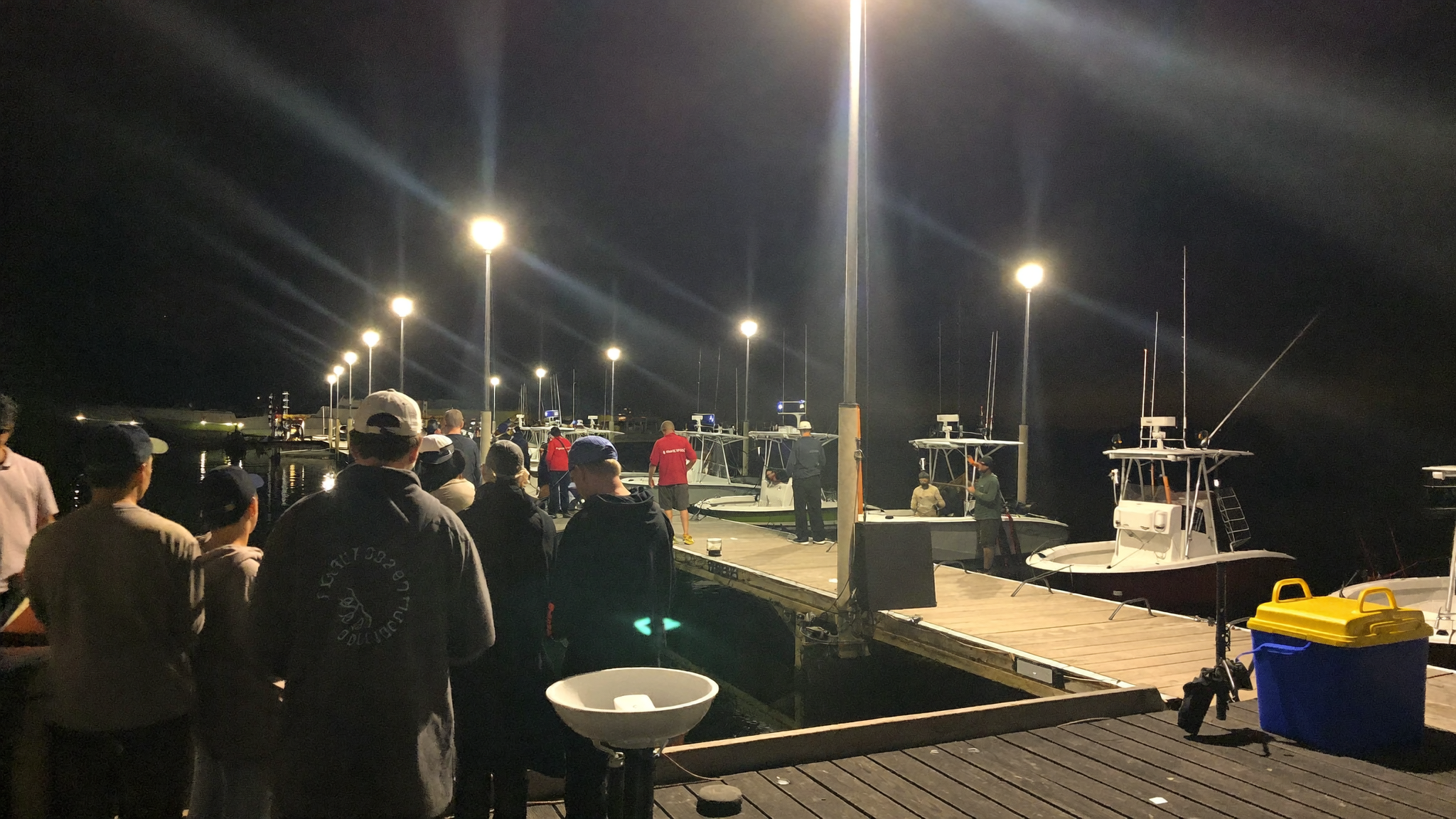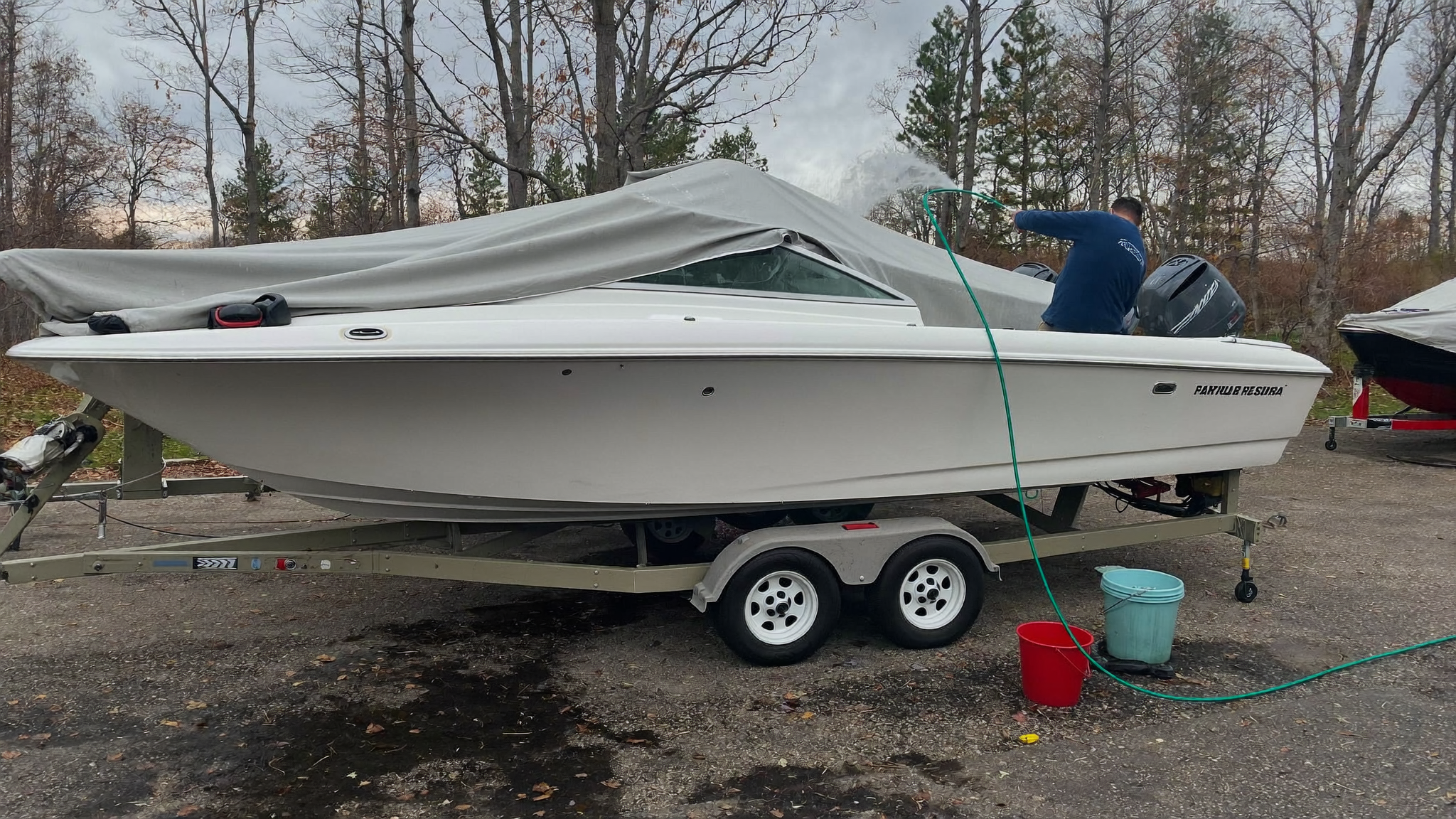
Search for boat storage Charleston, SC and you get a wall of numbers that do not compare to each other. A fenced gravel lot off a back road and a marina dry stack with launch service are both called boat storage, and they are not the same product. Here is how marinas actually set a rate, what moves that rate up or down, and what to ask before you sign anything.
Three products, three very different prices
Almost every quote you get around Charleston falls into one of three buckets.
Outdoor lot storage is the cheapest. Your boat sits on its trailer in a fenced yard and you tow it to a ramp yourself. You are paying for a parking space and a gate code.
Dry stack storage sits in the middle at most marinas. Your boat lives on a rack in a building or under a roof, and the marina’s forklift puts it in the water when you call ahead, then pulls it out when you are done. You are paying for the rack, the equipment and the crew who run it.
A wet slip keeps the boat in the water at a dock, ready whenever you are. No forklift, no trailer, no launch window. You are paying for waterfront, which is usually what makes a slip the most expensive of the three per foot.
That spread is why online price lists confuse people. Our Charleston boat storage guide compares the three side by side.
How marinas price boat storage around Charleston, SC
Marina storage is almost always priced per foot, per month. The marina sets a rate per foot and multiplies it by your boat’s length. That is why two boaters at the same marina, in the same kind of storage, pay different amounts.
Four details decide which number goes into that math:
- Length overall, not the number in the brochure. Most marinas measure bow to stern, including the swim platform and a bracket-mounted outboard. A 24-foot boat can measure 26 feet by the time the tape stops.
- Beam and weight. A wide boat needs a wider rack or a bigger slip, and dry stack racks have weight limits. A heavy 26-footer can cost more than a light one.
- Covered or open. A rack under a roof costs more than one out in the weather, and the same goes for a covered slip.
- Length brackets. Some marinas skip the per-foot math and sell in tiers: up to 24 feet, 25 to 28 feet, and so on. An inch over a tier and you pay the next one.
Wet slips add one more wrinkle. Many marinas charge for the slip, not the boat. If the only opening is a 32-foot slip and your boat is 26 feet, you may be quoted the 32-foot rate.
What the rate includes, and what gets billed separately
This is where two quotes that looked close stop being close. Ask what the monthly rate actually buys.
Usually included: the space itself, gate or dock access, and at a dry stack, the launch and haul-out by forklift. Often extra: shore power and water at a slip, pump-out, fuel, shrink wrap and winterizing, bottom cleaning, detailing, and any haul-out that is not a routine launch. Some marinas also cap how many launches a month the rate covers, or set hours when the forklift runs.
Two more line items catch people out. Most marinas want proof of insurance and current registration before your boat goes on a rack or in a slip. And the billing term matters: a rate quoted by the year and a rate quoted by the month are not the same deal. Hidden Cove Marina bills storage monthly or annually rather than putting everyone on one fixed term, and the dry stack storage terms and wet slip storage terms spell out what each agreement covers.
Why a quote close to the harbor runs high
Storage near the harbor competes with some of the most expensive waterfront in the state, and two things follow from that.
Location does most of the work. A rack ten minutes from downtown and a rack forty minutes inland are not priced the same, even when the building is identical. That is the main reason plenty of Charleston boaters look inland to the Santee Cooper lakes, Lake Moultrie and Lake Marion, where the storage math changes and the water is far less crowded.
Salt is an expense of its own. A boat kept in salt water generally needs bottom paint, zincs and more frequent washdowns than the same boat on a freshwater lake. None of that shows up on the storage invoice, but it shows up. Freshwater storage takes most of it off the table.
Storage at Hidden Cove Marina on Lake Moultrie
Hidden Cove Marina is in Moncks Corner, on the Lake Moultrie side of the Santee Cooper lakes and an easy drive inland from the Charleston area. The three things most boaters juggle are in one place here: dry stack storage, wet slips and public ramp access. Storing the boat and launching it are not two errands at two addresses.
A few things that are easy to miss when you are lining up quotes:
- Billing is monthly or annual, your choice, instead of one fixed term for everybody.
- The Ship’s Store is on the property for whatever you forgot, with free in-store pickup and nationwide shipping if you would rather order ahead.
- Swig & Swine serves BBQ right there, with outdoor seating, a private dining room and cocktails.
- We are open seven days a week, 7:00 AM to 5:00 PM.
Five questions to ask before you sign
Take the same short list to every marina you call. The answers are what make two prices comparable.
- How do you measure my boat, and what length will I be billed for?
- Is the rate monthly or annual, and what happens if I leave mid-term?
- What is included, from launches to power, water and pump-out, and what is billed separately?
- What insurance and registration do you need from me?
- Is there a waiting list, and how far out is it?
Write the answers next to each price. A quote with no launch fee, no power charge and an honest measurement often beats a lower headline number.
Where your boat sleeps this winter
If the season is winding down and the boat still has nowhere to go, start with its length and the kind of storage you want, then ask the Hidden Cove team for a storage quote. Still torn between the two? This month’s look at dry stack or a wet slip for the winter lays out the trade-offs, and our South Carolina boat winterization checklist covers what to handle before the boat goes up for the season.
Frequently asked questions
How much does it cost to store a boat in Charleston?
It depends on which product you are buying. An outdoor lot spot for a trailered boat is the cheapest option in any market, a dry stack rack costs more because the forklift and the crew come with it, and a wet slip is usually the highest per foot because you are paying for waterfront. Marinas quote per foot of length overall, so the only way to compare two prices fairly is to give both marinas the same boat measurement and ask what the rate includes.
How much does it cost to store a 20 ft boat?
A 20-foot boat is priced on its measured length overall, not the model name, so a swim platform or a bracket-mounted outboard can push it into a higher bracket. Ask the marina how they measure, whether they bill per foot or in length tiers, and whether covered space costs more than open. A 20-footer also fits most dry stack racks easily, which usually gives you more options and better pricing than a larger boat gets.
How much does it cost to dock a boat in Charleston, SC?
Wet slip rates are quoted per foot per month, and many marinas charge for the slip rather than the boat, so a 26-foot boat in the only open 32-foot slip may be billed at 32 feet. Shore power, water and pump-out are often billed on top of the slip rate. Saltwater dockage also carries upkeep that never appears on the invoice, including bottom paint and zincs.
Where is the cheapest place to store a boat?
At home on the trailer, if your neighborhood allows it. After that, a fenced outdoor lot is the lowest-cost paid option, because you are renting a parking space and nothing else. The trade-off is time: you tow, launch and retrieve the boat yourself every trip, and the boat sits in the weather. Dry stack and wet slip storage cost more because they remove that work and get you on the water faster.