What “Wet Slip” Actually Means (And Why It Matters for Boat Storage)
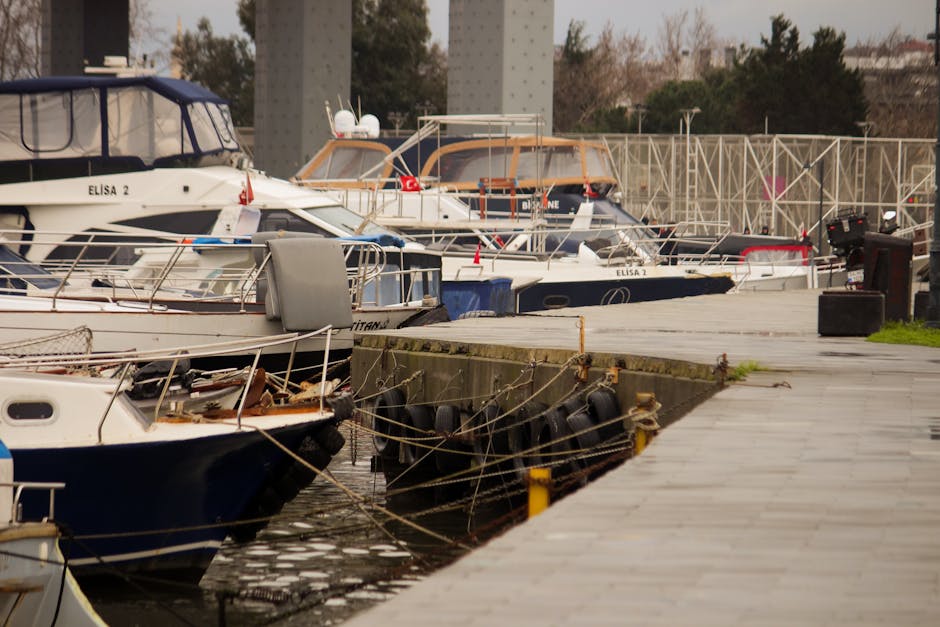
Wet slip meaning: A wet slip is a designated space at a marina or dock where your boat stays in the water at all times. Your boat floats in its own spot, secured by dock lines, and is ready to use whenever you are.
Here’s a quick breakdown:
| Term | What It Means |
|---|---|
| Wet slip | Boat stays in the water in a dedicated docking space |
| Dry slip / dry stack | Boat is stored out of the water on land or in a rack |
| Trailer storage | Boat is kept on a trailer, launched when needed |
If you own a boat and want it ready to go at a moment’s notice, a wet slip is the most convenient option. No launching. No trailering. Just show up and go.
For a busy family in Moncks Corner looking to squeeze a weekend trip on the Cooper River into an already packed schedule, that kind of hassle-free access makes a real difference.
But wet slips aren’t a perfect fit for everyone. They come with trade-offs around maintenance, cost, and exposure to the elements. This guide breaks all of that down so you can decide if a wet slip is the right home for your boat.
Defining the Wet Slip Meaning and How It Works
To truly grasp the wet slip meaning, it helps to visualize a parking garage for boats, but instead of asphalt, you have the refreshing waters of the Cooper River or Lake Moultrie. A wet slip is a structural “U” shape built into a dock system. Unlike a standard dock where you might tie up parallel to the main walkway (often called a side-tie), a slip surrounds your boat on three sides.
This configuration is a game-changer for vessel protection. Because the boat is tucked into its own “stall,” it is shielded from the heavy wake of passing traffic and is much easier to board. You aren’t just tying up to a pier; you are occupying a dedicated berth.
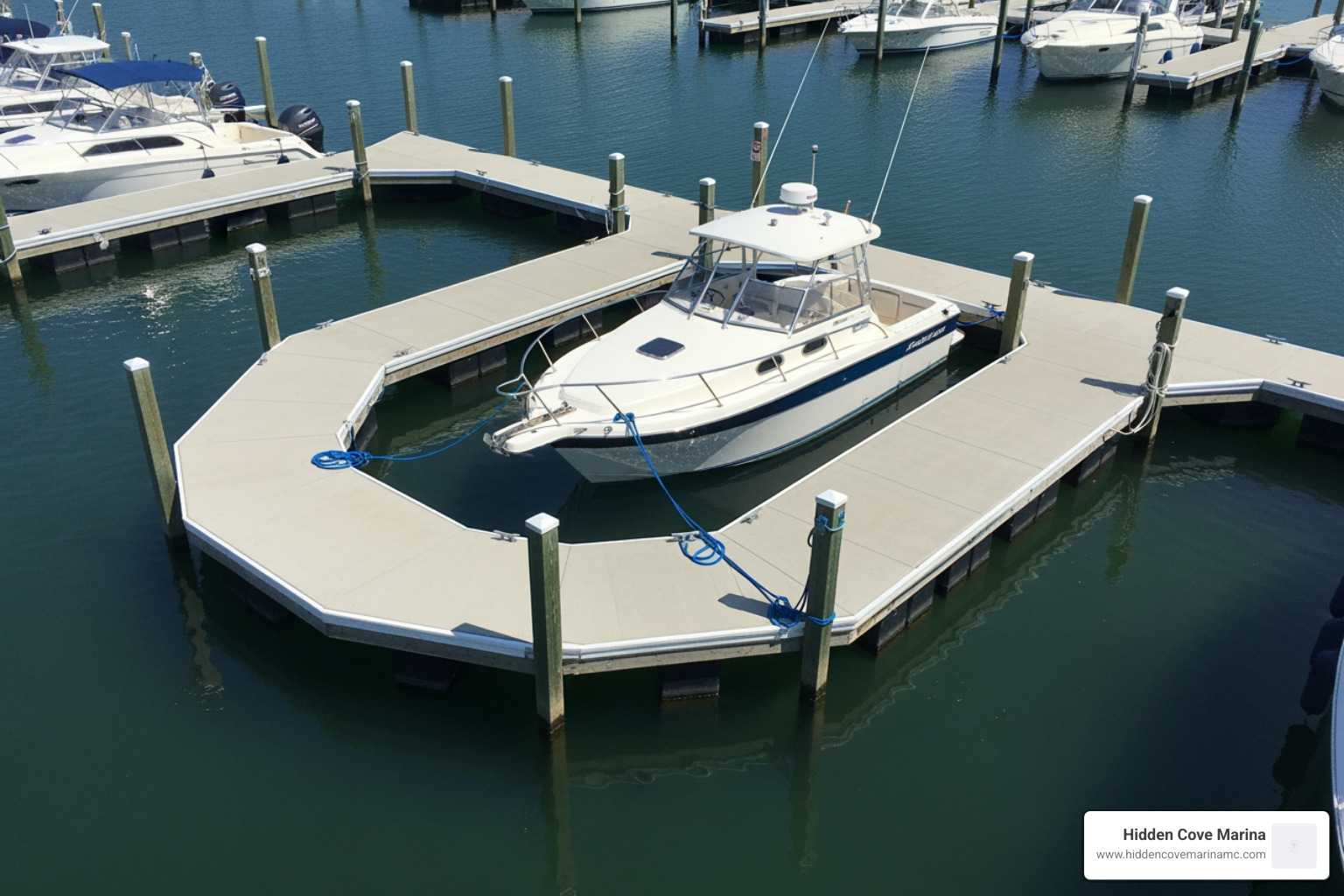
In marina architecture, you’ll often see different layouts:
- F-Shape and T-Shape Docks: These describe the way the main walkways and individual slips are connected.
- Floating Docks: At Hidden Cove Marina, we understand that water levels on the river can fluctuate. Floating wet slips move up and down with the tide or water displacement, ensuring your dock lines stay at the correct tension and your boat remains safe.
- Mooring vs. Slipping: While “mooring” is a broad term for securing a vessel, a slip specifically refers to this rectangular “parking space” that allows for easy bow-in or stern-in docking.
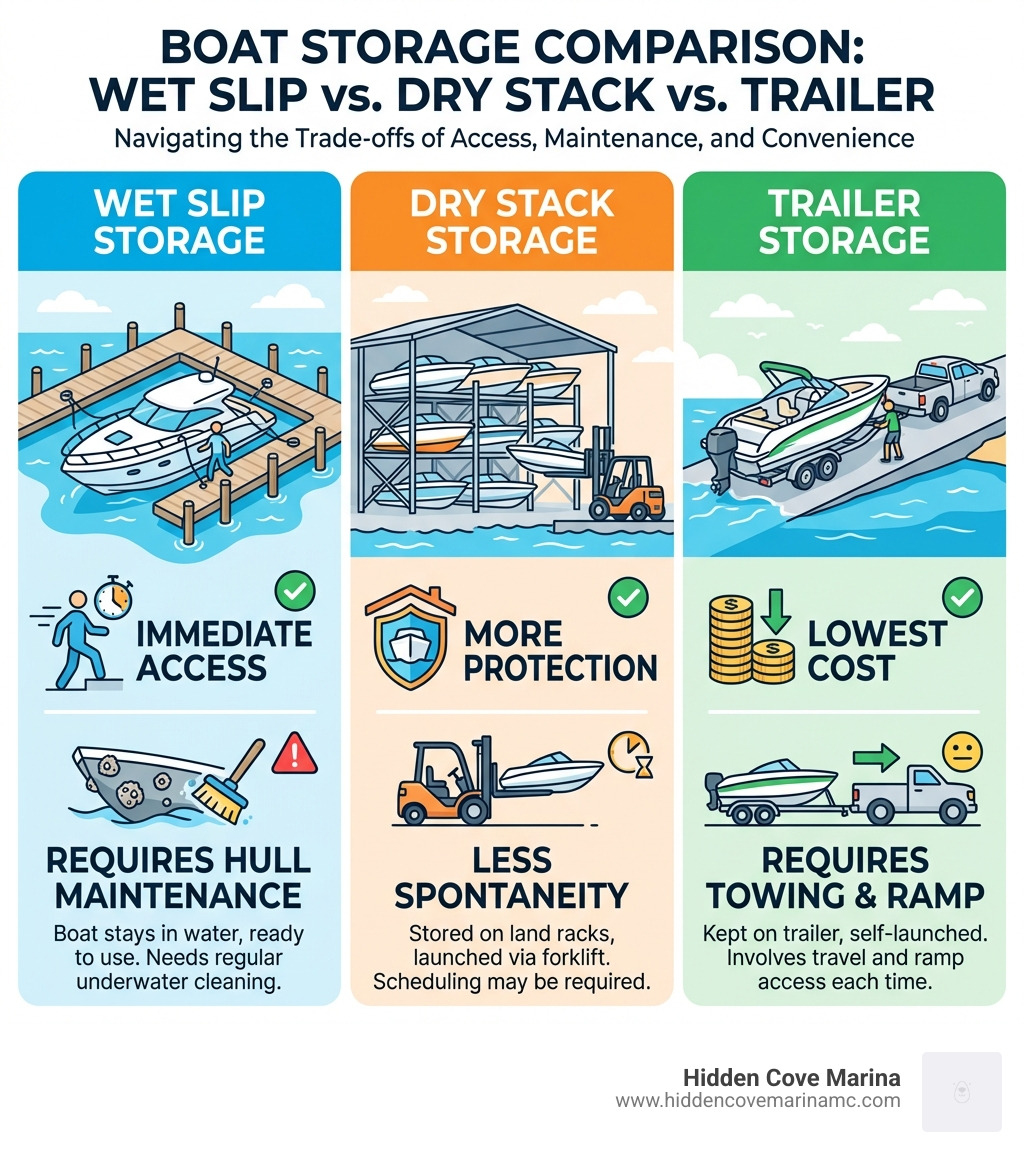
Wet Slip vs. Dry Slip: A Comparison of Storage Options
Choosing how to house your investment is one of the biggest decisions a boat owner makes. In our region, the choice usually comes down to three main contenders.
| Feature | Wet Slip | Dry Stack | Trailer Storage |
|---|---|---|---|
| Accessibility | Immediate (24/7) | Requires Forklift | Requires Towing/Ramp |
| Spontaneity | High | Medium (Call ahead) | Low |
| Hull Protection | Requires Anti-fouling | Excellent | Excellent |
| Vessel Size | Virtually any size | Usually under 30-40ft | Limited by trailer/truck |
| Maintenance | Higher (Hull cleaning) | Lower | Lower |
The Convenience Factor
The primary reason boaters choose a wet slip is the “spontaneous outing.” If you finish work early in Moncks Corner and want to catch the sunset on the water, you simply walk down the dock, untie, and go. There is no waiting for a forklift operator or navigating a crowded public boat ramp.
Dry Stack Considerations
Dry Stack Boat Storage is a fantastic alternative for those who want to keep their boat’s hull pristine. In this setup, your boat is stored in a giant rack system on land. When you want to use it, a large forklift launches it for you. While this offers great protection from the elements, it does mean you are often limited by the marina’s operating hours and forklift availability.
For a deeper dive into which is right for your specific lifestyle, check out our comparison on Wet Slips vs Dry Stack Boat Storage in Charleston SC.
Advantages and Disadvantages of Choosing a Wet Slip
Every rose has its thorn, and every boat storage method has its pros and cons. Understanding the wet slip meaning involves looking at the lifestyle it provides versus the extra work it requires.
The Advantages
- The Dockside Lifestyle: A wet slip isn’t just storage; it’s a destination. Many of our guests enjoy “dockominium” living—hanging out on the boat while it’s tied up, enjoying a cold drink, and utilizing shore power for AC or music.
- Utilities: Most wet slips come equipped with fresh water hookups and shore power. This allows you to keep your batteries topped off and your systems running without burning fuel.
- No Size Limits: If you have a large cruiser or a sailboat with a deep draft, a wet slip is often your only viable option, as dry stacks have strict weight and height limits.
The Disadvantages
- Marine Growth: Because the hull is submerged, algae, barnacles, and “slime” will eventually call your boat home. This requires regular cleaning or specialized paint.
- Environmental Exposure: Your boat is out in the sun and rain. UV rays can fade gelcoat and upholstery over time. However, choosing a covered wet slip can significantly mitigate this by providing much-needed shade.
- Security and Storms: While we provide top-notch security features, a boat in a wet slip is more susceptible to storm surges or electrolysis (corrosion caused by stray electrical currents in the water) than a boat on land.
For those who prioritize ease of use, Wet Slip Boat Storage remains the gold standard for active boaters.
Essential Maintenance for Boats in Wet Slips
If you decide that a wet slip is for you, a little bit of preventative maintenance goes a long way. Keeping a boat in the water 24/7 is different than keeping it in a garage.
- Anti-Fouling Paint: This is a specialized bottom paint that contains biocides to discourage marine growth. It’s a must-have for boats living in wet slips.
- Zinc Anodes: These “sacrificial” pieces of metal are attached to your engine or hull. They are designed to corrode so that your expensive metal parts don’t. Check them every few months!
- Hull Scrubbing: Even with paint, you’ll occasionally need a “short haul” or a diver to give the bottom a quick scrub to maintain fuel efficiency and speed.
- Proper Winterization: Even in South Carolina, we get those freezing nights. Proper winterization—including antifreeze and fuel stabilizers—is essential for the longevity of your engine.
- Bilge Pump Checks: Since your boat is in the water, your bilge pump is your last line of defense against rain or small leaks. Ensure it is functional and your battery is charged.
- Mooring Covers: To fight UV damage, always apply a high-quality mooring cover from bow to stern. Expert tip: Roll it from bow to stern to avoid getting tangled in your dock lines!
General Boat Storage wisdom suggests that for every hour you spend on maintenance, you save ten hours of repair work later.
Frequently Asked Questions About Wet Slip Meaning
What is the true wet slip meaning for new boaters?
For a beginner, the wet slip meaning is simply “readiness.” It means your boat is a permanent part of the marina. You get a dedicated slipway and access to all Marina Services, like our Ship’s Store and fuel docks. It’s about joining a community of fellow boaters rather than just visiting a ramp.
How does the wet slip meaning change with boat lifts?
You might see some boats in wet slips that are actually suspended above the water. This is achieved using a boat lift (like a Hydrohoist). This gives you the best of both worlds: the convenience of a wet slip location with the hull protection of dry storage. These pneumatic or electric systems mitigate marine growth and hull staining entirely.
How much does a wet slip typically cost?
Pricing is usually calculated by the “linear foot.” If you have a 25-foot boat in a 30-foot slip, you may be charged for the length of the slip or the boat, depending on marina policy. Other factors include:
- Location: Prime spots closer to the main channel or amenities often cost more.
- Utilities: Shore power and water may be flat-fee or metered.
- Seasonality: Some boaters prefer year-round leases, while others look for seasonal rates.
For a detailed breakdown of what to expect in our area, see our Quick Guide to Boat Slip Pricing.
Conclusion
At Hidden Cove Marina, we believe that boating should be about relaxation and making memories, not stressing over logistics. Whether you are cruising the Cooper River or exploring the vast waters of Lake Moultrie, understanding the wet slip meaning helps you choose the storage solution that fits your life.
Our premier destination in Moncks Corner offers more than just a place to park your boat. With our top-notch facilities, genuine southern hospitality, and the mouth-watering BBQ at Swig & Swine right on-site, we provide a comprehensive boating lifestyle. From our well-stocked Ship’s Store to our secure docking, we treat every vessel like it’s our own.
Ready to claim your spot on the water? Explore our Hidden Cove Marina Boat Slip Rentals on Lake Marion and let us help you get the most out of every season. We’ll see you at the dock!