If you fish around here, you already know Santee Cooper striped bass are part of the lake’s DNA. Come summer, Lake Moultrie turns into one of the most interesting striper fisheries in the South. The fish get harder to pattern when the water heats up, but they’re still out there, and folks who know where to look keep putting them in the boat. This guide walks you through where summer stripers hide on Lake Moultrie, how to catch them, and the gear and rules of thumb that make a hot July morning worth getting up for. Whether you’re a longtime local or just launching for the first time, this is your starting point.
The Santee Cooper Striper Story
Here’s a piece of history a lot of weekend anglers don’t realize: the Santee Cooper lakes are the birthplace of the landlocked striped bass fishery. When the dams and the Diversion Canal went in back in the 1940s, striped bass that normally ran to the ocean to spawn got trapped in the new lake system. Instead of dying off, they adapted. They learned to live, feed, and reproduce entirely in fresh water. Biologists took notice, and what happened here became the model for landlocked striper stocking programs all over the country.
That’s a big deal. The striped bass you tie into on Lake Moultrie are part of a fishery that changed how the country thinks about this species. Locals call them stripers or rockfish, and they fight like freight trains. Hook a good one and you’ll understand why people drive hours to fish these lakes. It’s South Carolina fishing culture at its finest, and it started right here in Berkeley County.
Where to Find Summer Stripers on Lake Moultrie
Summer is the trickiest season for stripers, and it comes down to one thing: temperature. Striped bass are cool-water fish living in a warm-water lake. When the surface heats up into the 80s and 90s, the fish chase comfort and oxygen. Find the cooler, well-oxygenated water and you’ve found the stripers. Here’s where to start looking.
Cool-Water Refuges and the Diversion Canal
The Diversion Canal connecting Lake Marion to Lake Moultrie is one of the most reliable summer striper spots in the whole system. Moving water stays cooler and carries more oxygen than the open flats, and it pushes baitfish along with the current. Stripers stack up where that cooler water flows in, especially near the Pinopolis end of the lake where deeper water gives them somewhere to retreat when the sun climbs.
Think of these spots as refuges. When the rest of the lake feels like bathwater, the fish slide into deeper holes, channel edges, and current seams where conditions stay livable. Early in the season you’ll find them shallower, but as July and August grind on, they push deeper and rely on these cool-water pockets more and more.
Open-Water Schooling Fish
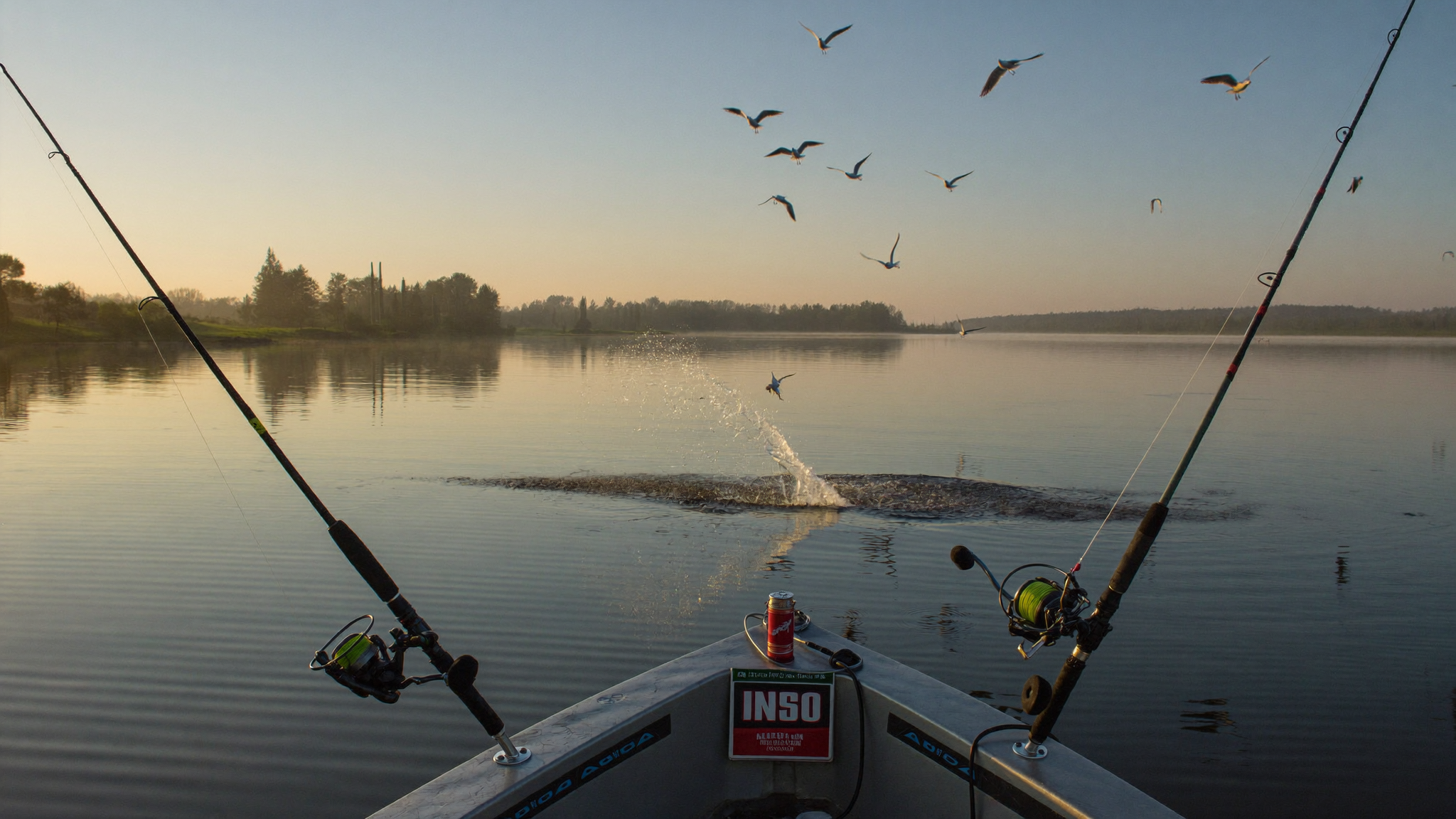
The other summer pattern is the one that gets anglers fired up: open-water schooling. Stripers are pack hunters, and when they corner a school of shad or herring near the surface, they blow it up in a frenzy. You’ll see birds diving and bait scattering, and that’s your cue to move in fast and quiet. These surface blowups often happen at first light or right before dark, when the fish ride higher in the water column.
Keep your eyes on the horizon and a rod rigged and ready. Schooling activity can be here one minute and gone the next, so when you spot it, ease in close and make your cast count. It’s some of the most exciting fishing Lake Moultrie has to offer.
Summer Tactics
Once you know where they are, it comes down to presentation. Two approaches do most of the work on summer stripers, and the best anglers know when to switch between them.
Live Bait vs. Trolling
Live bait is the bread and butter of Santee Cooper striper fishing. Blueback herring and gizzard shad are the gold standard, fished on a free line, a downline, or under a float depending on how deep the fish are holding. A lively herring on a downline over a school of suspended stripers is tough to beat. Keep your bait frisky, keep it in the strike zone, and let the fish come to you.
When the stripers are scattered or you’re trying to cover water and find them, trolling earns its keep. Pulling bucktails, swimbaits, or umbrella rigs lets you fish multiple depths and a lot of real estate until you dial in where the fish are stacked. Once you mark a school, you can slow down and switch to live bait. The two tactics work hand in hand, and pairing them is how locals stay on fish all summer long.
Reading the Thermocline and Time of Day
If you take one thing from this guide, make it this: learn the thermocline. In summer, the lake separates into layers. The warm surface layer sits on top, the cold deep layer sits below, and in between is the thermocline, a narrow band where the temperature drops fast. Below the thermocline there’s often not enough oxygen for stripers to hang around, so they hold right at that band where cool water and good oxygen meet. A decent fish finder will show you that layer, and once you spot it, you set your baits right at that depth.
Time of day matters just as much. Summer stripers feed hardest in the low light of early morning and late evening. Midday, with the sun beating down, the bite usually slows and the fish sink deeper. So launch early, fish hard through the cool hours, and don’t be surprised when things go quiet by mid-morning. The same low-light rhythm drives a lot of summer bite patterns on the lake, so if you fish for more than one species, the timing carries over.
Gear, Bait & a Few Local Rules of Thumb
You don’t need a tournament rig to catch summer stripers, but a few things make life easier on the water:
- Rods and reels: Medium to medium-heavy spinning or baitcasting setups with a smooth drag. Stripers pull hard, and a sticky drag loses fish.
- Line: 15 to 20 pound test is a solid all-around choice for live bait and trolling alike.
- Bait: Fresh, lively blueback herring or shad. Keeping bait healthy in summer heat means a good aerated baitwell and not overcrowding it.
- Electronics: A fish finder that marks the thermocline and shows bait schools is worth its weight in gold this time of year.
- Sun protection: Long days under the Lowcountry sun add up. Hat, polarized sunglasses, and plenty of water.
A couple of local rules of thumb: follow the bait, because where the herring and shad go, the stripers follow. And handle your fish with care in warm water, since summer stripers stress quickly. If you’re releasing one, get it back in the water fast. You can grab fresh bait and tackle at our Ship’s Store before you head out.
Stripers aren’t the only game on this lake, either. Plenty of folks split their summer between rockfish and whiskerfish, and our catfishing Lake Moultrie guide covers the other half of that equation. If you like a little friendly competition, keep an eye on our fishing tournaments schedule, too.
Limits & Regulations
Striped bass regulations on the Santee Cooper lakes can change, and they sometimes carry seasonal rules that differ from the rest of the state. Creel limits, size minimums, and any summer harvest restrictions are set by the state and updated as the fishery is managed, so the smart move is to check the current rules before you keep a fish.
Always confirm the latest creel and size limits with the South Carolina Department of Natural Resources (SCDNR) before you head out. Their fishing regulations page is the official source, and it’s the only place we’d trust for the current numbers. A quick look before you launch keeps your day legal and helps protect this fishery for the next generation of anglers.
FAQ
Are there striped bass in Lake Moultrie?
Absolutely. Lake Moultrie, as part of the Santee Cooper lakes, is one of the most famous striped bass fisheries in the country. It’s actually where the landlocked striper fishery got its start, so yes, there are plenty of stripers in these waters.
When is the best time to catch stripers on Santee Cooper?
Spring and fall are classic, but summer can be excellent if you adjust your approach. In the heat, focus on the low-light hours of early morning and late evening, and fish the cooler, oxygen-rich water near the thermocline and the Diversion Canal.
Where do you catch striped bass in summer?
Look for cool-water refuges first. The Diversion Canal, deeper holes near the Pinopolis end, and channel edges all hold summer fish. Also watch open water for schooling blowups, where stripers chase bait near the surface at dawn and dusk.
What bait works best for Santee Cooper stripers?
Live blueback herring and gizzard shad are the top producers. Fish them on a downline or free line over schools you mark on your electronics. When you’re searching for scattered fish, trolling bucktails or swimbaits helps you cover water and locate them.
What are the striped bass limits on the Santee Cooper lakes?
Creel and size limits are set by the state and can include seasonal rules specific to the Santee Cooper system. We don’t list exact numbers here because they change. Always check the current SCDNR limits before keeping any fish.
Ready to Chase Some Stripers?
Summer striper fishing on Lake Moultrie rewards the anglers who show up early, follow the bait, and pay attention to the water. When you’re ready to get after them, we’ve got you covered. Gas up, grab bait and tackle at the Ship’s Store, and launch from Hidden Cove. We’ll see you on the water.