How to Score a Low Cost Slip Rental Without Sinking Your Budget
What Is an Annual Boat Slip Rental (and Is It Right for You)?
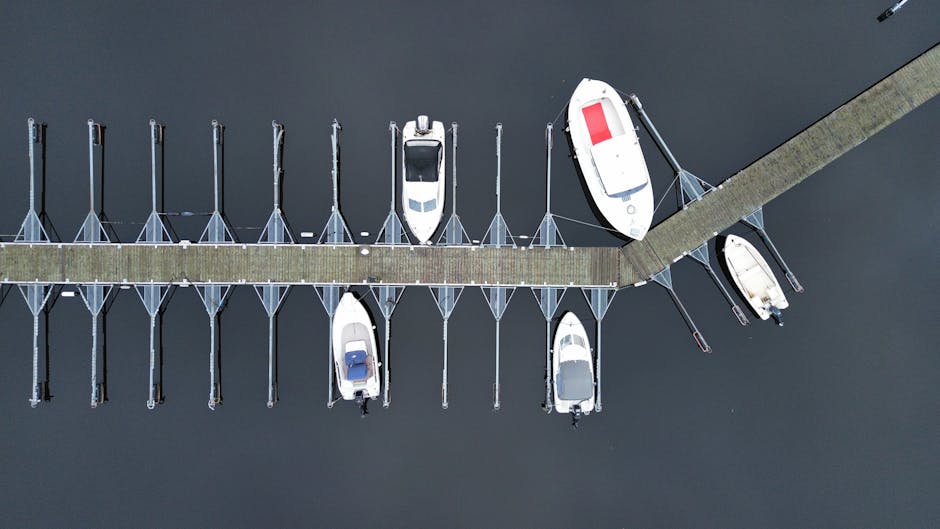
An annual boat slip rental is a long-term lease that gives you a dedicated space to dock your boat at a marina for a full year – no scrambling for a spot every weekend, no paying premium transient rates each time you head out on the water.
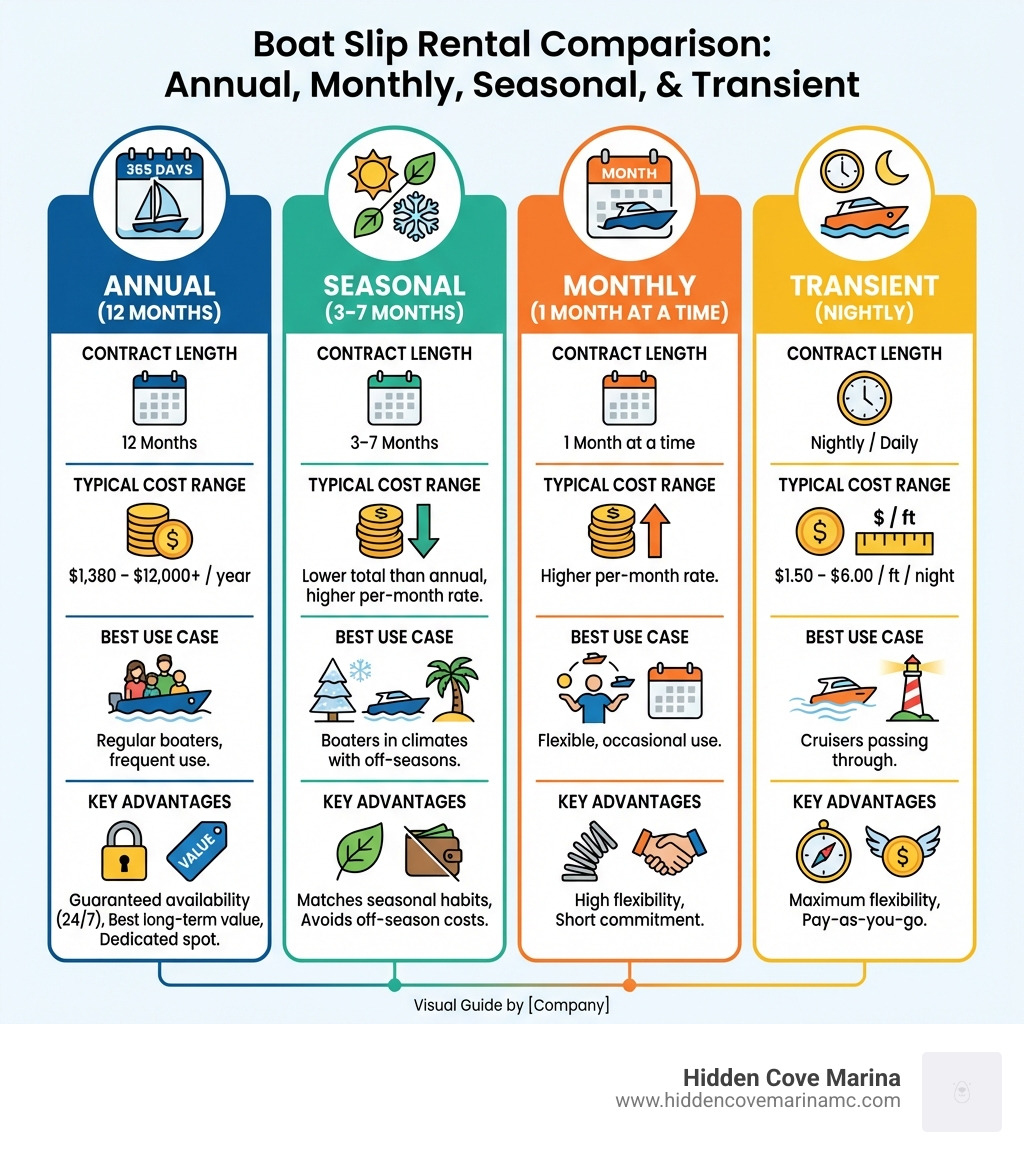
Here’s a quick breakdown of how annual rentals compare to other options:
| Rental Type | Typical Duration | Best For | Approx. Cost Range |
|---|---|---|---|
| Annual | 12 months | Regular boaters who go out often | $1,380- $12,000+/year |
| Seasonal | 3-7 months | Boaters in climates with off-seasons | Slightly less than annual |
| Monthly | 1 month at a time | Flexible, occasional use | Higher per-month rate |
| Transient | Nightly | Cruisers passing through | $1.50- $6.00/ft/night |
For a busy family on the Cooper River who wants to be on the water without spending half Saturday on logistics, an annual slip is often the smartest move.
But costs vary a lot – from around $150/month in some Gulf Coast markets to $25 per foot per month in cities like Los Angeles. Location, boat size, slip type, and marina amenities all play a role.
If you’re new to marina terminology, it can also help to understand what a “marina” is and how slips are typically organized. For a quick overview, see Marina.
This guide breaks down everything you need to know so you can find a slip that fits your boat and your budget.
The Benefits of Securing an Annual Boat Slip Rental
Choosing an annual boat slip rental isn’t just about having a place to park your vessel; it’s about claiming your piece of the waterfront. When we commit to a full year, we unlock a level of convenience that transient boaters can only dream of.
First and foremost is guaranteed availability. There is nothing quite like the heartbreak of a sunny Saturday morning spent calling every marina on Lake Moultrie only to find out they are “full for the weekend.” With an annual lease, that slip is yours 24/7, 365 days a year.
Then there is price stability. While transient rates can spike during holiday weekends or peak fishing seasons, an annual contract locks in your rate. Many marinas even offer significant discounts for long-term commitments. For instance, we’ve seen cases where a monthly “transient” rate might be double what an annual tenant pays when broken down month-by-month.
Beyond the finances, you gain community perks. Annual tenants are the “regulars.” You get to know your neighbors, the marina staff, and often enjoy “home port” advantages like discounts at the Ship’s Store or priority scheduling for maintenance. It turns a hobby into a lifestyle.
If you are ready to stop trailering and start sailing, you can Explore annual wet slip options to see how a permanent home for your boat changes the game.

Factors That Influence Annual Boat Slip Costs
If you’ve ever wondered why your buddy pays $200 a month while you’re staring at a $600 bill, it usually comes down to the “Big Three”: Length, Beam, and Location.
- Boat Length (LOA): Most marinas charge by the foot. However, it is important to note that many charge based on the greater of the boat’s overall length or the slip size. If you put a 20-foot boat in a 30-foot slip, you might still be paying for 30 feet of real estate.
- Beam Width: As boats get wider (looking at you, catamarans!), they require more “elbow room.” Some marinas charge a premium for extra-wide slips or multi-hull vessels because they take up the space of two standard boats.
- Draft Requirements: If you have a deep-keel sailboat, you need deeper water. Slips with greater “Mean Low Water” (MLW) depths often command higher prices because they require more dredging and maintenance.
Typical Boat Slip Fee Comparison
| Slip Type | Features | Estimated Annual Cost |
|---|---|---|
| Open Wet Slip | Uncovered, basic dock | $1,380 – $5,100 |
| Covered Wet Slip | Roof protection from sun/rain | $3,500 – $9,200 |
| Slip with Lift | Mechanical hoist to keep hull dry | $5,000 – $11,000+ |
Geographic Pricing Trends for an Annual Boat Slip Rental
Geography is perhaps the biggest “hidden” factor in your budget. While we focus on our beautiful South Carolina waters, it’s helpful to see where the market stands nationally to understand the value we have here.
In high-demand coastal hubs like Los Angeles or Annapolis, you can expect to pay anywhere from $20 to $30 per foot per month. In those markets, a 30-foot boat could easily cost you $9,000 a year just for the water it displaces!
Conversely, in the South Carolina market—specifically around Moncks Corner and the Cooper River—the pricing is often much more approachable for families. We see annual rates that provide much better “bang for your buck,” especially when you factor in the southern hospitality and amenities included in the package.
Slip Types and Amenities Impacting Your Budget
Not all slips are created equal. When browsing for an annual boat slip rental, you’ll need to decide which “extras” are worth the investment:
- Covered Slips: These are like a garage for your boat. They protect your gelcoat and upholstery from the brutal SC sun. Expect to pay a 20-30% premium for this luxury.
- Boat Lifts: These mechanical systems keep your hull out of the water, preventing algae growth and hull blisters. These are often separate leases or add-ons to the base slip price.
- Utilities: Most annual slips include fresh water, but shore power is usually metered. Depending on whether you run a 30-amp or 50-amp service (and how often you blast the AC), this can add $20 to $65+ to your monthly bill.
- Security: High-end marinas offer gated access, 24-hour security staff, and lighted docks. While this might increase the base price, the peace of mind is often worth every penny.
For those who want the best of both worlds, you can find More info about wet slip options that balance protection and price.
Requirements and the Application Process
Securing an annual boat slip rental is a bit like renting an apartment—there’s paperwork involved. Marinas need to ensure that the boats in their care are safe, insured, and well-maintained.
Common Requirements Include:
- Liability Insurance: This is non-negotiable. Most marinas require a minimum of $100,000 to $300,000 in liability coverage. You will likely need to list the marina as an “additional insured” on your policy.
- Vessel Registration: You’ll need to provide current state registration or Coast Guard documentation.
- Recent Photographs: Some marinas have “age limits” on boats (often 10-15 years) or require a photo to ensure the vessel isn’t an eyesore or a sinking hazard.
- Security Deposits: Expect to pay a deposit equivalent to one month’s rent or a flat “seniority deposit” to hold your spot for the following year.
If a wet slip feels like too much commitment, or if your boat is on the smaller side, you might want to check out More info about dry stack alternatives. Dry storage keeps your boat tucked away in a warehouse and launched only when you’re ready to ride.
Standard Lease Terms for an Annual Boat Slip Rental
Most annual leases run for a 12-month cycle (for example, May 1st to April 30th). Here is what you should look for in the fine print:
- Payment Structures: You can often choose between a single lump-sum payment (which sometimes earns you a 5% “store credit” or discount) or semi-annual/quarterly installments.
- Prorated Starts: If you join mid-season, a fair marina will prorate your first year’s dues so you only pay for the months you’re actually there.
- Termination Policies: What happens if you sell your boat? Most annual contracts require 30 to 60 days’ notice and may include a small fee for early termination.
- Maintenance Fees: Some marinas tack on a small quarterly maintenance fee (often around $30) to cover dock repairs and environmental upkeep.
Budgeting for Hidden Fees and Additional Costs
The “sticker price” of a slip isn’t the whole story. To truly avoid sinking your budget, you need to account for the “extras.”
1. Metered Electricity: As mentioned, water is usually free, but electricity is not. If you have a larger boat with a refrigerator, battery chargers, and air conditioning running 24/7, your electric bill can become a significant monthly expense.
2. Pump-out Services: Keeping our waterways clean is a priority. Some marinas offer free pump-out services to annual slip holders, while others charge a small fee per visit.
3. Liveaboard Surcharges: Planning to live on your boat? That’s great! But be prepared for a liveaboard fee. This usually ranges from $150 to $500+ per month to cover the extra use of showers, laundry, Wi-Fi, and trash services.
4. Trailer Storage: Where does your trailer go once the boat is in the water? If you don’t have room at home, you’ll need to budget for dry trailer storage, which can cost anywhere from $50 to $150 per month.
Alternatives to Traditional Wet Slips
If an annual boat slip rental doesn’t quite fit your budget or your boat type, don’t worry—you have options.
- Dry Stack Storage: Your boat is stored on a rack in a secure building. When you want to use it, you call ahead, and the marina staff uses a giant forklift to put it in the water. This is often cheaper than a covered wet slip and keeps your boat cleaner.
- Moorings: Instead of a dock, you tie up to a buoy in the harbor. You’ll need a dinghy to get to your boat, but the cost is significantly lower (sometimes as low as $600–$900 per year).
- Trailering: The most “budget-friendly” option. You keep the boat at home and use a public or private boat landing. It’s more work, but the “rental” cost is zero.
For those who prefer the flexibility of trailering, you can find More info about boat landing access to make your launches as smooth as possible.
Frequently Asked Questions about Annual Rentals
How are boat slip assignments typically determined?
Slip assignments are usually a puzzle solved by the harbor master. They look at your boat’s length, beam, and draft to ensure it fits safely. Seniority also plays a role; long-term tenants often get first dibs on the “premium” slips closer to the parking lot or the Ship’s Store.
What are the standard insurance requirements for long-term renters?
Most marinas require a comprehensive liability policy. A common standard is $300,000 in coverage, including protection for hull damage, machinery, and environmental spills (SRCC). You must provide a certificate of insurance annually.
Are there restrictions on boat age or type for annual slips?
Yes. Many marinas do not allow “houseboats” (the floating house variety) or wooden boats due to higher maintenance and sinking risks. Some also have a 10- or 15-year age limit on vessels unless they are in pristine, “collector” condition.
Conclusion
Finding the perfect annual boat slip rental is the key to a stress-free boating season. By understanding the costs of length, electricity, and insurance upfront, you can ensure your time on the Cooper River is spent relaxing, not worrying about the bill.
At Hidden Cove Marina, we pride ourselves on being the premier destination for boaters in Moncks Corner. We combine top-notch facilities with that unmistakable southern hospitality. Whether you’re docking for the night or the year, we’ve got a spot for you—and when you’re done on the water, you can grab some world-class BBQ at our on-site Swig & Swine.
Ready to make the Cooper River your home port? Explore our premier marina services and let’s get you out on the water!