Why Charleston Marina Boat Storage Is More Competitive Than Ever
Charleston marina boat storage is in high demand — and if you’re a local boater, you already know how fast good slips disappear.
Here’s a quick look at your main options:
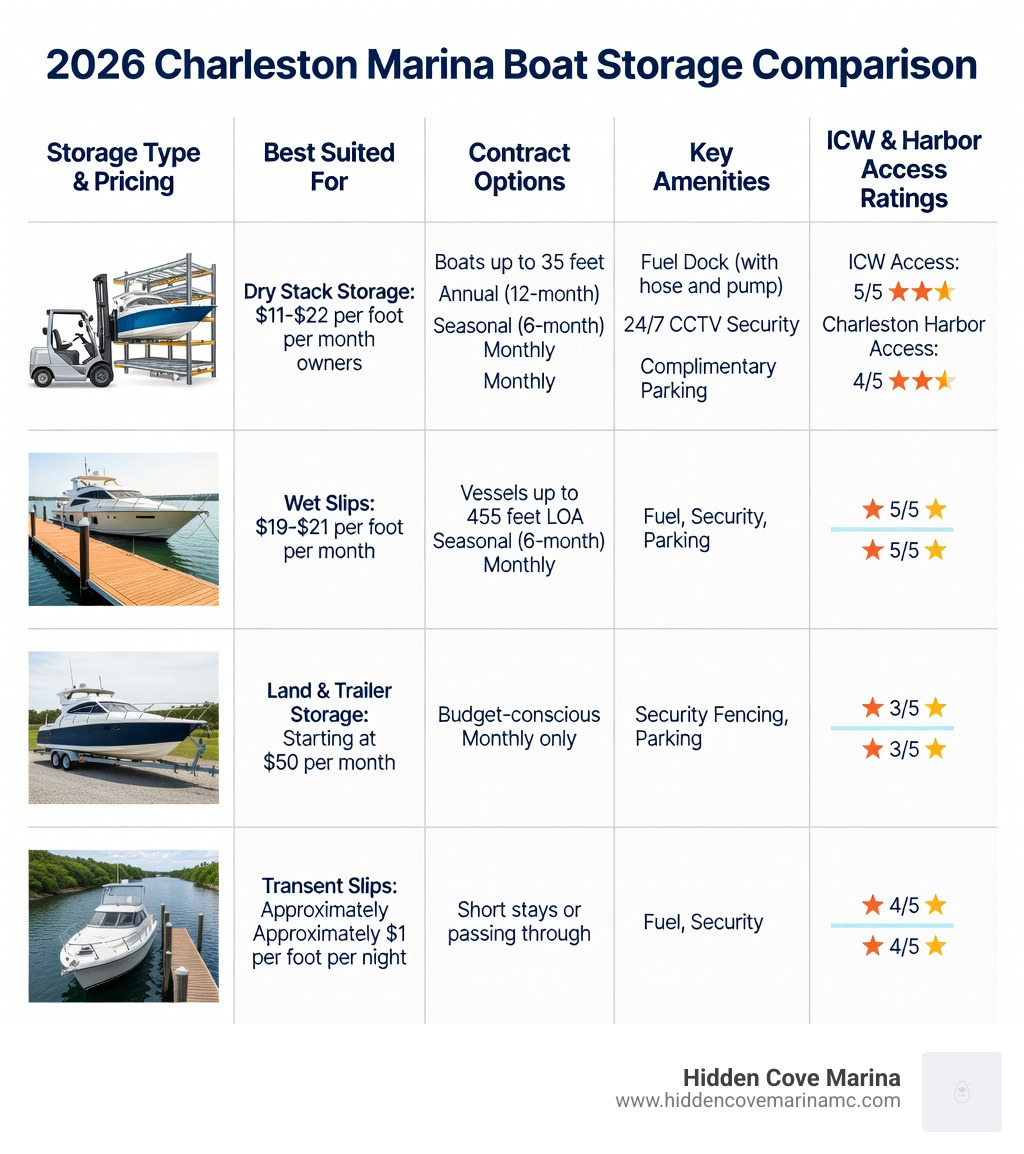
| Storage Type | Best For | Price Range |
|---|---|---|
| Dry Stack | Boats up to 35′ | $11 – $22/ft per month |
| Wet Slip | Larger vessels, liveaboards | $19 – $21/ft per month |
| Land/Trailer Storage | Budget-conscious owners | From $50/month |
| Transient Slip | Short stays, passing through | ~$1/ft per night |
Charleston sits at the heart of South Carolina’s Lowcountry, with easy access to the ICW, Charleston Harbor, and the Cooper River. That means a lot of boats — and a lot of competition for storage space.
Whether you’re running out of Moncks Corner for a weekend on the Cooper River or keeping a weekend vessel closer to the harbor, picking the right storage setup matters. It affects your cost, your convenience, and how fast you can get on the water.
This guide breaks it all down — storage types, pricing, amenities, and how to actually lock in a spot before the season fills up.
Understanding Your Charleston Marina Boat Storage Options
When we talk about charleston marina boat storage, we aren’t just talking about a single parking spot for your boat. The Lowcountry offers a diverse range of environments—from the salt spray of the harbor to the brackish waters of the Cooper River and the freshwater expanses of Lake Moultrie. Because the geography is so varied, the storage options have evolved to meet very specific needs.
The Main Contenders: Dry Stack vs. Wet Slips
For most of us, the choice comes down to two primary methods: keeping the boat in the water (wet slip) or keeping it in a rack (dry stack).
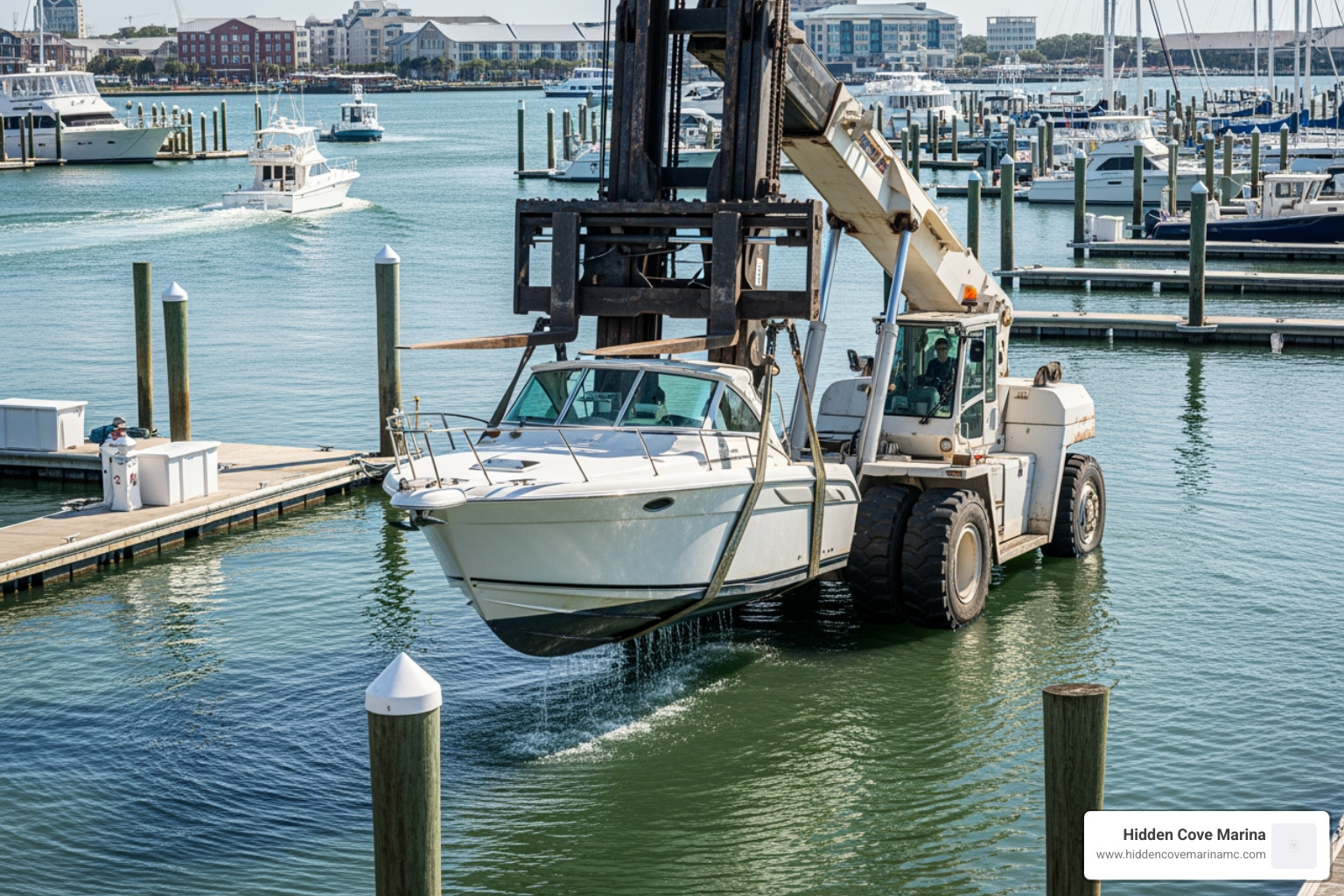
Dry stack storage involves large, specialized forklifts that whisk your boat from a staging area and tuck it away into a massive, multi-level rack system. It’s incredibly popular for center consoles and dual consoles because it keeps the hull out of the water, preventing barnacle growth and osmotic blistering.
Wet slips, on the other hand, allow you to keep your boat tied up and ready to go at a moment’s notice. This is often the only choice for larger yachts or sailboats that exceed the height and weight capacities of a forklift.
Land Storage and Trailer Parking
If you prefer to haul your own boat but don’t have the space at home (or your HOA has sent you one too many “reminders”), land storage is a lifesaver. Many facilities in the Charleston area offer dedicated lots for trailer parking. This is often the most budget-friendly way to secure your vessel, though it does mean you’ll be spending more time at the boat ramp.
If you are looking for a place to drop in for the day, the SC DNR Boat Landings list is an essential resource for finding public access points throughout the Lowcountry.
Benefits of Dry Stack Storage
There is a reason dry stack facilities are popping up all over the coast. For boats under 35 feet, it is arguably the most “hassle-free” way to own a boat.
- Hull Protection: By storing your boat out of the water, you eliminate the need for bottom paint and significantly reduce the maintenance required to keep your hull looking brand new.
- Storm Safety: While no storage is 100% hurricane-proof, being elevated in a sturdy rack system often provides better protection from storm surges than being tossed around in a wet slip.
- Capacity and Limits: Most modern dry stack facilities in the area can handle up to 300 slips. However, weight and size are factors; usually, there is a 35-foot limit for these facilities.
- Concierge Life: Many dry stacks now use apps. You tap a button on your phone, and by the time you arrive at the marina, your boat is in the water, fueled up, and iced down.
For more details on how this works, check out our More info about dry stack storage page.
Choosing Wet Slips for Larger Vessels
Sometimes, your boat is just too big for a shelf. If you’re rocking a 40-foot sportfisher or a massive motor yacht, wet slips are your home.
- Deep Water Access: Many premier marinas in the Charleston area are designed to accommodate vessels with significant drafts. Some can even handle a 455-foot LOA (Length Overall).
- Full Utilities: Unlike dry storage, a wet slip gives you 24/7 access to shore power and fresh water hookups. This is essential if you plan on spending nights on the boat or keeping the AC running to prevent mold.
- Pump-out Services: Maintaining a large vessel requires infrastructure. Quality marinas provide regular pump-out services (often scheduled several times a week) to keep your holding tanks managed without you having to move the boat.
To see what a premier wet slip setup looks like, visit our More info about wet slip storage section.
Pricing and Contract Structures for Charleston Marina Boat Storage
Let’s talk numbers. The cost of charleston marina boat storage can vary wildly based on your boat’s size and the level of service you expect.
Typical Rate Breakdown
In the current market, you can expect to see the following price structures:
- Dry Stack: Rates often start around $11.00/ft per month for basic annual contracts at some facilities, while newer, high-amenity facilities may charge $22.00/ft per month or more.
- Wet Slips: These generally range from $19.00/ft to $21.00/ft per month. That many marinas include utilities like electricity and water in this price, which adds significant value.
- Minimums: Almost every marina has a minimum length requirement—usually 20 feet. If your boat is 17 feet, you’re likely still paying the 20-foot rate.
- Additional Fees: Watch out for “high rack” fees (often an extra $50/month) if your boat has a T-top or a particularly tall bridge. Environmental fees (usually around $10/month) are also standard to help the marina maintain clean water standards.
Contract Types
- Annual Contracts: This is the gold standard. Most marinas require a one-year commitment to lock in the best rates. You’ll usually need to provide a one-month security deposit and the first month’s rent upfront.
- Seasonal/Quarterly: Some facilities offer shorter terms, but be prepared to pay a premium—sometimes as high as $28.00/ft per month for a quarterly lease.
- Monthly/Transient: If you’re just visiting, transient rates are typically around $1.00 per foot per night.
Insurance and Requirements
Don’t expect to show up and drop your boat in the water without paperwork. Marinas are high-liability zones. Most will require proof of insurance with at least $500,000 in liability coverage, often naming the marina as an “additional insured.”
Accessibility and Location for Charleston Marina Boat Storage
Location is everything. If you live in Summerville or Moncks Corner, keeping your boat at a harbor-front marina might mean an hour-long drive before you even touch a dock line. Conversely, if you want to fish the reefs, a Cooper River location requires a bit of a haul downriver.
- The Stono River and ICW: Facilities located along the Stono River (near Mile Marker 476) offer direct access to the Intracoastal Waterway. This is prime territory for those who love cruising the coast.
- Charleston Harbor: This is the heart of the action. It’s beautiful, but it’s also the most crowded and expensive area for storage.
- Cooper River and Moncks Corner: For those who prefer a mix of salt and fresh water, the Cooper River is a hidden gem. It’s less congested than the harbor and offers a more laid-back, “Old South” boating experience.
Regardless of where you dock, we always recommend participating in America’s Waterway Watch to help keep our local waters safe and secure.
Reserving Your Spot for Charleston Marina Boat Storage
If you take one thing away from this guide, let it be this: Don’t wait until May to look for a slip.
Availability trends in Charleston show that most facilities are at 90-100% capacity by the time the azaleas bloom. Many of the newer facilities have waitlists that can stretch for months.
To secure a spot:
- Inquire Early: Start your search in the winter months.
- Use Online Scheduling: Many modern marinas allow you to book tours or check availability through their websites.
- Check Access Points: If slips are full, look into More info about boat landing access to see if a trailer-storage-plus-ramp strategy works for you.
Essential Amenities and Concierge Services
A great marina is more than just a place to park; it’s a community and a service center. When comparing charleston marina boat storage options, look closely at the amenities included.
The “Must-Haves”
- Fuel Docks: Look for marinas with high-speed pumps and both gas and diesel options. Some even offer discounts (like 10 cents off per gallon) for their long-term tenants.
- Security: This is non-negotiable. You want gated access, 24-hour surveillance, and ideally, on-site staff.
- Private Parking: On a busy Saturday, public boat ramps are a nightmare. A marina with a private, member-only parking lot is worth its weight in gold.
- The Ship’s Store: Forget the ice? Need a spare spark plug? A well-stocked on-site store saves you a trip to the gas station.
Modern Technology and Maintenance
The “Old School” way of calling the marina and hoping someone answers is fading. The best facilities now offer:
- App-Based Concierge: Schedule your launch, order ice and beer, and even request a pump-out all from your smartphone.
- On-Site Maintenance: Having a certified mechanic on-site for outboard service or hull cleaning is a massive convenience. Some marinas even offer winterization packages to keep your engine safe during those few weeks of Lowcountry “winter.”
Frequently Asked Questions about Charleston Boat Storage
What is the average cost of boat storage in Charleston?
The average cost depends on the type of storage. For a standard 25-foot boat, you’re looking at roughly $275–$550 per month for dry stack or wet slips. Land storage is significantly cheaper, often starting around $50–$70 per month for trailer parking.
Is insurance required for marina storage?
Yes. Almost every reputable marina in the Charleston area requires a minimum of $500,000 in liability insurance. You will usually need to provide a certificate of insurance before you can sign a lease.
What are the size limits for dry stack facilities?
Most dry stack facilities are designed for vessels up to 35 feet in length. There are also weight limits (often around 12,000 to 15,000 lbs) and height restrictions due to the rack spacing. If you have a large flybridge or a tuna tower, you may be limited to the “top rack” or a wet slip.
Conclusion
Finding the perfect charleston marina boat storage doesn’t have to be a headache. Whether you’re looking for the high-tech convenience of a dry stack or the classic feel of a deep-water wet slip, the Lowcountry has something for every boater.
At Hidden Cove Marina, we pride ourselves on offering more than just a place to tie up. Located in Moncks Corner on the beautiful Cooper River, we provide a premier destination for those who value southern hospitality and top-notch facilities. From our convenient boat rentals and secure storage to our Ship’s Store and world-class BBQ from Swig & Swine, we’ve built a place where the boating lifestyle truly thrives.
Ready to find your boat’s new home? Explore our More info about marina services and join our community on the water today. We’ll see you at the dock!