Choosing Between a Wet Slip and a Boat Lift for Your Vessel
The Real Difference Between a Wet Slip and a Boat Lift — and Which One Is Right for You
wet slip vs boat lift is one of the most common decisions boat owners face when choosing where to store their vessel. Here’s the quick answer:
| Feature | Wet Slip | Boat Lift |
|---|---|---|
| How it works | Boat stays in the water, tied to a dock | Boat is raised out of the water mechanically |
| Best for | Larger boats, frequent social use, marina amenities | Smaller boats, hull protection, low-fouling storage |
| Hull exposure | Constant water contact | Out of water when not in use |
| Maintenance | Bottom paint required; more hull cleaning | Less cleaning; no anti-fouling paint needed |
| Convenience | Step aboard and go | Lower and launch each time |
| Typical size limit | Up to 70 ft | Usually up to ~40 ft |
| Storm protection | Limited | Can be raised above surge |
Picture this: it’s a Saturday morning on Lake Moultrie. The sun is just cracking over the cypress trees, the catfish are biting, and you want to be on the water — now. The last thing you want is to waste time figuring out where or how your boat is stored.
That’s exactly why choosing the right storage setup matters so much for boaters here in Moncks Corner and Berkeley County.
Whether you’re a weekend angler like Mark who needs to launch fast, a family boater like Jessica looking for a stress-free day on the water, or a new boat owner like Brian trying to make sense of it all — the choice between a wet slip and a boat lift will shape your entire boating experience.
Both options have real, meaningful advantages. And both come with trade-offs worth understanding before you commit.
This guide walks you through everything you need to know — from hull protection and maintenance to costs and local conditions on the Cooper River — so you can make the right call for your boat and your lifestyle.
Understanding the Fundamental Difference: Wet Slip vs Boat Lift
At its most basic level, the debate of wet slip vs boat lift comes down to where your boat spends its “sleeping” hours.
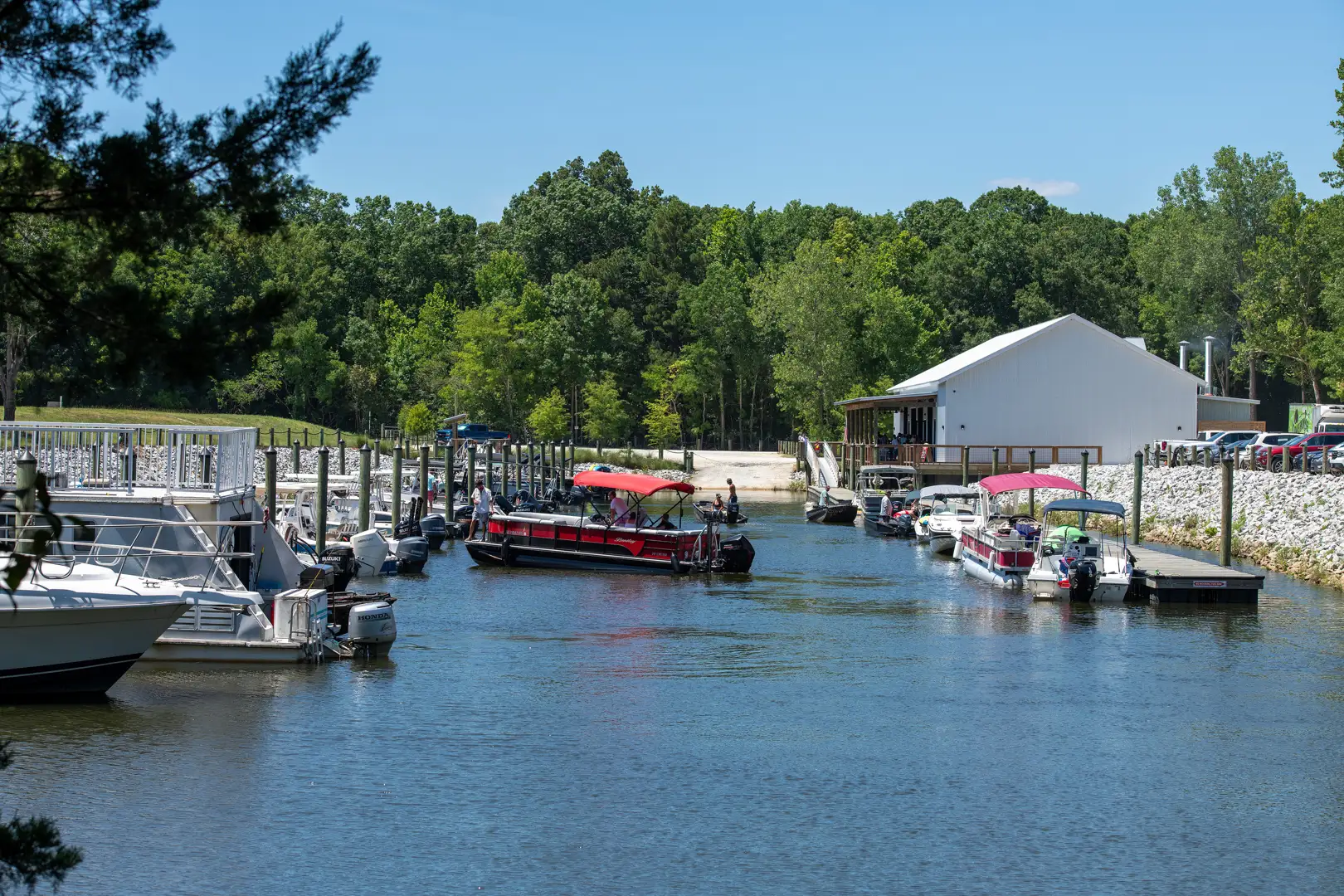
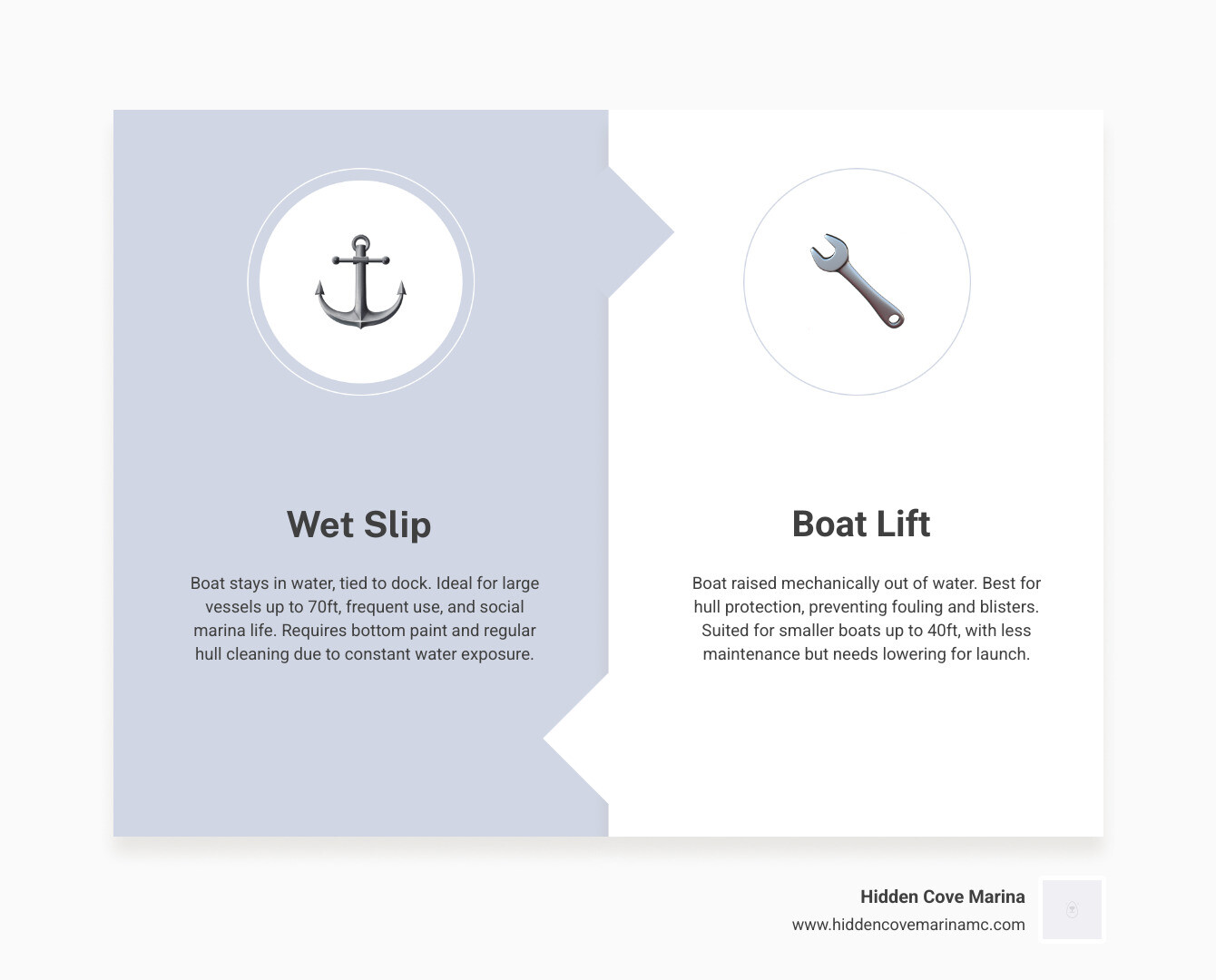
A wet slip is essentially a parking space in the water. Your boat remains afloat, secured to a dock or finger pier by mooring lines. It is the traditional way to store a boat at a marina, allowing the vessel to sit at its natural buoyancy level. This is the go-to for everything from small skiffs to 70-foot yachts.
A boat lift, on the other hand, uses a mechanical cradle or hoist system to raise your boat completely out of the water. When you aren’t using the boat, it sits suspended above the surface, supported by bunks similar to a boat trailer. While highly effective for protecting the hull, lifts are generally limited to vessels under 40 feet and require significant mechanical infrastructure.
If you are looking for the ultimate in accessibility, you can Explore Our Wet Slip Options at Hidden Cove Marina.

The Inviting Advantages of the Wet Slip Lifestyle at Hidden Cove
There is a certain “magic” to the wet slip lifestyle that you just don’t get with other storage methods. In Moncks Corner, our wet slips offer more than just a place to tie up; they offer a front-row seat to the Cooper River community.
- Immediate Water Access: There is no waiting for a lift to lower or a tractor to bring your boat around. You simply step off the dock and onto your deck. This is a game-changer for those who enjoy evening cruises or early morning fishing trips on Lake Moultrie.
- Social Atmosphere: Wet slips are the heart of marina life. Whether you’re swapping fishing stories with neighbors or enjoying a cold drink at sunset, the dock is a social hub.
- No Size Restrictions: If you’ve graduated to a larger cruiser or a heavy yacht, a wet slip is often your only viable option. Most lifts tap out at 30,000 to 40,000 pounds, but a slip can accommodate almost anything that floats.
- Convenience for Maintenance: It is much easier to wash the topsides or load gear when the boat is at dock level rather than suspended six feet in the air.
For a deeper dive into why this might be the right choice for you, check out the-ultimate-guide-to-understanding-wet-slip-boat-storage.
Maintenance Considerations: Wet Slip vs. Boat Lift
While wet slips offer unmatched convenience, they do require a specific maintenance mindset. Because your hull is in constant contact with the water, you have to stay ahead of Mother Nature.
- Bottom Paint & Anti-Fouling: To prevent barnacles, algae, and slime from hitching a ride, boats in wet slips require high-quality anti-fouling paint. This needs to be refreshed every 1–2 years.
- Osmosis and Blistering: Over many years, fiberglass hulls can actually absorb a small amount of water (roughly 2-5% of their weight). This can lead to “osmosis” or hull blistering if the gelcoat isn’t properly maintained.
- Sacrificial Anodes: In the brackish waters of the Cooper River, galvanic corrosion is a real threat. You’ll need to check your “zincs” (anodes) regularly to ensure they are protecting your underwater metal parts.
- Routine Inspections: Since you can’t see the bottom of the boat, you’ll need to occasionally have the hull cleaned by a diver or haul the boat out for a power wash.
Why Many Boaters Consider a Boat Lift for Hull Protection
If you talk to a boater who has switched to a lift, they will likely tell you they’ll never go back. The primary driver here is protection.
By keeping the boat high and dry, you eliminate the risk of marine growth entirely. No growth means no need for expensive bottom paint, which keeps your hull looking brand new and maintains your boat’s top speed and fuel efficiency.
Lifts also offer a significant advantage during South Carolina’s storm season. While a boat in a wet slip is at the mercy of rising tides and wind-driven chop, a lifted boat can often be raised above the storm surge, keeping it safe from bashing against the dock or being swamped by waves.
Practicalities and Potential Limitations of Boat Lifts
Before you run out to buy a lift, there are some logistical “anchors” to consider.
- Initial Investment: Installing a boat lift is a significant upfront cost. Estimates often range from $10,000 to $25,000, and that doesn’t include the heavy-duty electrical work (often requiring 240V power) needed to run the motors.
- Mechanical Reliability: Lifts have cables, pulleys, and motors that live in a harsh, humid environment. They require their own maintenance schedule to prevent snapping cables or motor failures.
- Point Loading: Unlike the water, which supports your boat evenly, a lift concentrates the boat’s weight on specific “bunk” points. If the boat isn’t positioned perfectly, this can cause hull stress or “hooking” over time.
- Tidal Limitations: On parts of the Cooper River where tides can fluctuate significantly, you have to be careful. If the tide goes out too far, you might find your lift “high and dry,” unable to reach the water to launch.
Making the Final Call: Your Best Fit in Moncks Corner
So, how do you decide? In Berkeley County, your decision should be guided by how you actually use your boat.
If you are a “social boater” who loves the marina lifestyle and owns a larger vessel that stays in the water year-round, a wet slip is likely your best bet. It’s affordable, convenient, and keeps you in the middle of the action.
If you own a high-performance wake boat or a pristine center console and you’re obsessive about hull cleanliness and resale value, the investment in a lift might be worth it.
To help you weigh the local secrets of docking in our area, take a look at moncks-corners-best-kept-docking-secrets-and-pricing.
Cost Comparison and Long-Term Value for Your Vessel
When comparing the costs of a wet slip vs boat lift, you have to look past the first month’s bill.
| Cost Category | Wet Slip | Boat Lift |
|---|---|---|
| Initial Cost | Low (Security Deposit) | High ($15k – $25k+) |
| Monthly Fees | Standard Slip Rent | Slip Rent + Lift Maintenance |
| Maintenance | Bottom Paint (~$1k/yr) | Mechanical Service (~$300/yr) |
| Hull Cleaning | Regular Power Washing | Minimal |
| Resale Value | Neutral | High (Adds value to property) |
While a boat lift has a massive upfront cost, it can save you money over a 10-year period by eliminating the need for professional bottom painting and hull repairs. However, for many, the monthly flexibility of a wet slip is much easier on the wallet.
For a detailed breakdown of what to expect in the Charleston and Moncks Corner market, read our quick-guide-to-boat-slip-pricing-and-marina-slip-pricing-in-charleston-sc-2025-cost-comparison.
Local Considerations for Moncks Corner and Lake Moultrie Boaters
Boating in Berkeley County isn’t like boating in the open ocean. We have unique conditions that should influence your choice.
- Fresh vs. Brackish Water: While Lake Moultrie is freshwater, the Cooper River can become brackish as you move toward Charleston. Freshwater is generally “kinder” to hulls, but slime and algae still grow. If you’re purely in the lake, a wet slip is much easier to maintain than in saltwater.
- Hurricane Readiness: We all know the drill when a storm enters the Atlantic. A boat lift can offer peace of mind by getting the boat above the water, but in a major hurricane, even a lift can be vulnerable. Many boaters prefer the flexibility of being able to quickly move a wet-slipped boat to a protected “hurricane hole.”
- HOA and Marina Rules: Before you dream of a lift, check the rules! Many marinas or waterfront HOAs have strict regulations about what kind of lifts can be installed, or if they are allowed at all. For more information on local waterway safety and regulations, you can visit the South Carolina Department of Natural Resources (SCDNR).
For more local tips, see our dock-it-or-dry-it-the-ultimate-charleston-boat-storage-guide.
Frequently Asked Questions about Boat Storage at Hidden Cove
Does a boat lift increase property value?
Yes, absolutely. In waterfront communities around Moncks Corner and Berkeley County, a functional, well-maintained boat lift is a huge selling point. It signals to potential buyers that the property is “move-in ready” for their vessel and that the previous owner cared about hull protection.
How often do I need to paint my boat’s bottom in a wet slip?
In our local waters, we generally recommend a fresh coat of anti-fouling paint every 12 to 24 months. This depends on how often you use the boat and whether you’re keeping it in the freshwater of the lake or the brackish sections of the river. Regular “wipe-downs” of the hull while you’re swimming can help extend the life of the paint.
Can I install a lift in a rented marina slip at Hidden Cove?
This is a common question! While many private docks allow for lifts, marina slips are usually standardized. However, there are “floating lift” options like the SeaPen or air-dock systems that don’t require permanent mounting to the dock structure. Always check with our management team before making any modifications to your slip.
Conclusion
Ready to find the perfect home for your boat? Whether you’re drawn to the vibrant community of our wet slips or exploring other options, Hidden Cove Marina offers unparalleled access to the beauty of Lake Moultrie and the Cooper River.
Choosing between a wet slip vs boat lift is about balancing your budget with your desire for convenience and protection. If you want the classic marina experience where your boat is always ready for a sunset cruise, our wet slips are waiting for you.
Don’t forget to swing by our on-site Swig & Swine BBQ for a delicious meal after your day on the water, or grab your live bait and gear at our Ship’s Store. We are proud to be the premier family-friendly boating destination in Moncks Corner.
Call Us to Reserve Your Slip at +1 843-899-3909 or visit us at 547 Reid Hill Rd, Moncks Corner, SC.
Discover more about our offerings on our boat-storage page!