
Church Island: A Lost Church Beneath the Lake
Church Island is one of South Carolina’s most unusual historic landmarks. Located on Lake Marion, the island is all that remains of an early 19th-century Episcopal chapel known as “Rocks Church.”
Established around 1804 near Rocks Plantation, the church served plantation families along the Santee River for over a century. A small cemetery grew around the chapel, holding generations of local residents.
Everything changed in the early 1940s when the Santee-Cooper Project dammed the river to create Lake Marion for hydroelectric power. Entire communities were submerged. The church itself was eventually demolished, but the cemetery sat just high enough to avoid being flooded. The congregation relocated to Eutawville, forming what is now the Church of the Epiphany. What remained behind became known as Church Island—a quiet, wooded graveyard rising from the lake.
A Cemetery Preserved by Chance
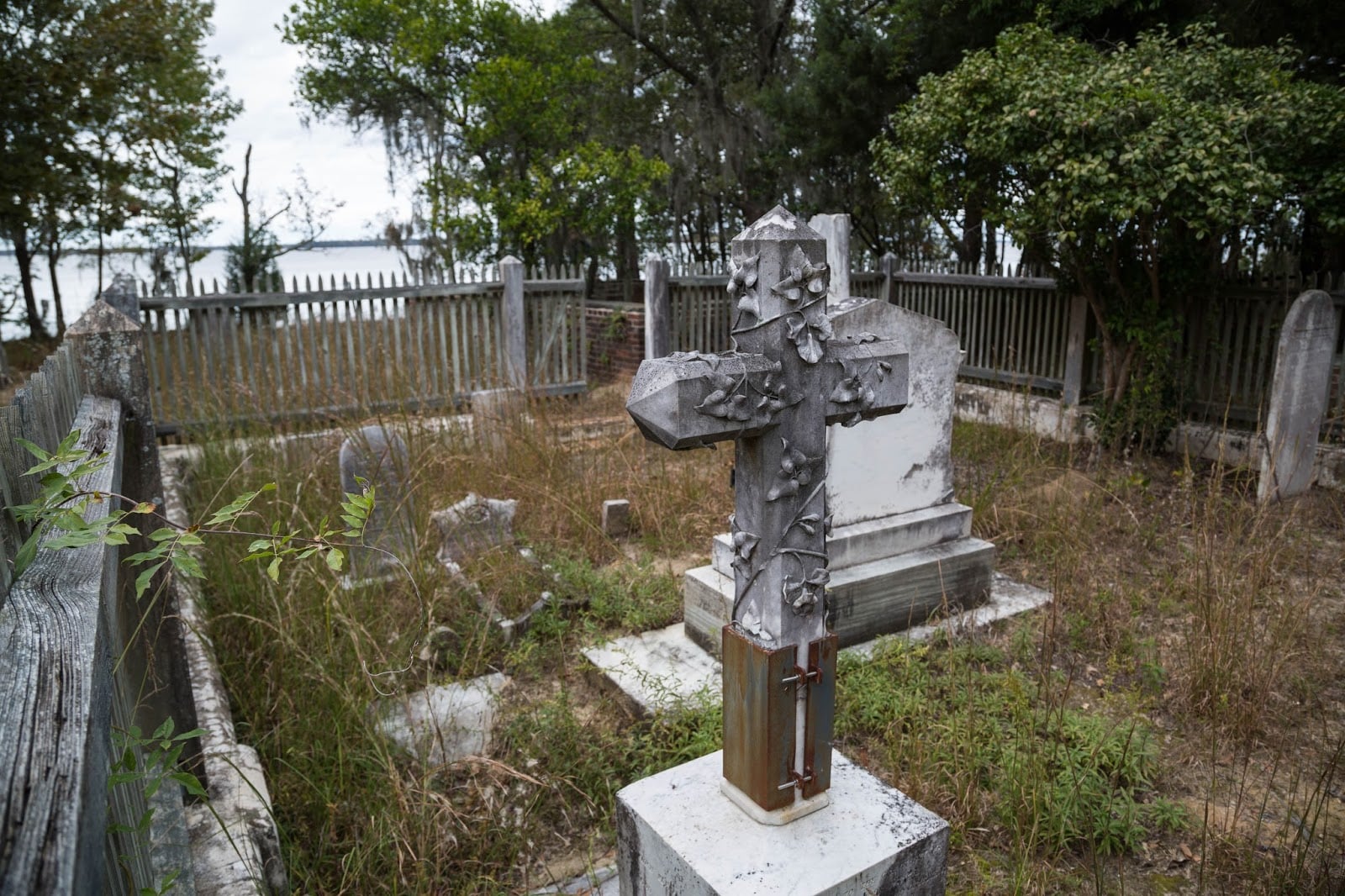
Today, Rocks Cemetery still stands on the island. Weathered headstones from the 1800s mark the graves of local families and Civil War veterans. A brick memorial plaque notes the location of the former chapel.
The site is still considered consecrated ground and is periodically maintained by local volunteers. Its survival is remarkable, especially considering that thousands of other graves in the region were lost beneath the reservoir’s waters.
Geography and Natural Setting
Church Island is a small, forested island surrounded by open freshwater. Cypress trees line the edges, Spanish moss hangs from hardwood canopies, and flooded timber still dots the surrounding lake. The setting feels remote and slightly mysterious—especially in early morning fog or late afternoon light.
Wildlife is abundant. Osprey and bald eagles soar overhead, herons stalk the shoreline, and alligators inhabit the nearby shallows. The mix of open water, marsh edges, and wooded interior makes the island a snapshot of South Carolina’s Midlands ecosystem.
Cultural and Recreational Appeal
Culturally, Church Island is a preserved fragment of a vanished river community. Recreationally, it has become a destination for kayakers, photographers, and history enthusiasts.
Often described as a “ghost island,” it’s frequently paired in local lore with the submerged ghost town of Ferguson nearby. Paddlers enjoy landing briefly to explore the quiet cemetery before continuing their journey across the lake.
How to Visit
Church Island is only accessible by water—there are no roads or bridges.
Most visitors launch from nearby landings such as Spiers Landing in Cross or Ferguson Landing near Eutaw Springs. Kayakers can reach the island in a moderate paddle, while motorboats can navigate to the general area using lake maps or GPS.
There are no docks or facilities on the island. Boats must be beached along the shoreline, and visitors should wear sturdy shoes. Because it is an active historic cemetery, respect is essential—leave no trace and do not disturb the graves or memorials.
A Unique Piece of South Carolina History
Church Island is not a typical tourist stop. There are no signs, ticket booths, or guided markers—just moss-draped trees, old headstones, and open water in every direction.
Standing among the gravestones while the lake stretches beyond you is a powerful reminder of how landscapes—and communities—change. It is a place where history and nature quietly coexist, preserved not by design, but by elevation and time.