The Summer Catfish Bite on Lake Moultrie: June–August Patterns
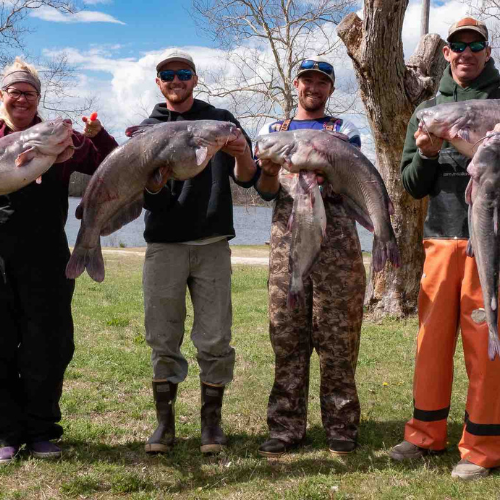
Summer catfishing on Lake Moultrie has a reputation problem. Locals know June through August is when the biggest blues feed hardest, but most weekend anglers write off the heat and miss the best night fishing of the year. The summer catfish bite on Lake Moultrie isn’t gone — it just moves. This is a seasonal guide to where the cats hold, when they eat, and how to fish them during the three hottest months on the lake. If you want the broader picture, our complete Lake Moultrie catfishing guide covers the year-round version of this fishery.
What Changes on Lake Moultrie in Summer
Two things shift the catfish game when summer hits. First, the lake stratifies — warm water sits on top, cool water sits below, and the thermocline (where the two meet) becomes the seam where most of the active fish live. On Lake Moultrie, the thermocline typically sets up between 15 and 22 feet, depending on weather and how much water moves through the dam.
Second, bait moves. Shad school up in tighter, deeper bait balls. White perch hold along the channel edges. The catfish that were spread across the lake in spring consolidate around bait — and bait sits at thermocline depth or a little above it.
Result: the cats aren’t gone, they’re just stacked where most casual anglers aren’t looking.
Where Catfish Hold in Hot Weather
Summer holds focus on three structure types:
- Main-lake ledges and channel edges. The old river channel cutting through Lake Moultrie is the highway. The drops from 12 to 25 feet hold catfish through the warm months. Look for ledges with brush or stump rows nearby.
- Deep brush piles and timber. Flathead catfish hold tight to deep cover and don’t move much in the heat. Find a brush pile in 18+ feet of water and you’ve found flathead water.
- The Diversion Canal at slack and current changes. When the dam isn’t generating, the canal is quiet. When current starts moving, bait drifts and cats feed in short, intense windows.
Best Times of Day to Fish
Summer is a low-light game. The bite windows that matter:
- Dawn (4:30 AM – 7:30 AM). The lake is cool, bait moves shallow, and catfish push up to feed. Fish ledges and main-lake humps in 8 to 14 feet.
- Dusk (7:30 PM – 9:30 PM). Mirror of dawn. The water surface temperature drops a few degrees and the lake comes alive.
- Full dark (10:00 PM – 2:00 AM). The prime window for big summer blues. Boat traffic is gone. Cats roam shallow to feed actively.
- Daytime (10:00 AM – 4:00 PM). Fish go deep. Drop to thermocline depth — 18 to 22 feet on most days. Lower numbers, but the fish you catch tend to run bigger.
Bait Selection for the Summer Bite
The fresh-bait rule applies year-round, but it’s most strict in summer when cats have a lot of options. The short list:
- Cut gizzard shad — the king of summer blue cat baits. Cast-netted that morning is best. Throw a fresh chunk every 20 to 30 minutes; the smell wash-out matters when the water is warm.
- Cut white perch — abundant and oily; trophy blues love it.
- Live bream — the flathead presentation. Live bait under a slip float, anchored over brush, is the night-fishing classic.
- Cut herring — when herring are in the river, switch.
Skip prepared baits and chicken liver for trophy hunting; channels still eat them, but the bigger fish want the real thing. You can pick up cut bait, ice, and any tackle you forgot in the Ship’s Store before you push off.
Tactics: Anchored, Drifting, and Night Fishing
Anchored. Pick a ledge, drop a marker buoy on the break, and anchor uplake of it so your baits drift back into the strike zone. Use a Santee rig (peg float lifts the bait off the bottom) and enough weight to hold position. This is the producer for big blues and flatheads.
Drifting. A bow-mount trolling motor at 0.5 to 1.0 mph dragging cut bait across mid-lake flats covers water and finds active fish. Best done early or late when the wind is calm enough to control the boat without burning batteries.
Night fishing. Anchor in 8 to 14 feet on a flat with bait nearby. Run a black light if you want to watch line; rig with circle hooks and slack drag. The biggest fish of the year often come between 11 PM and 1 AM. Take a buddy — night fishing solo is asking for trouble.
Beating the Heat for the Angler (Not Just the Fish)
The most common reason summer catfishing trips fail isn’t the bite — it’s the heat. The angler quits before the fish do. Stay in the game by:
- Starting at first light and being off the water by 10 AM, or starting at 7 PM and fishing into the night.
- Drinking water like it’s your job. The cooler should have water before it has anything else.
- Wearing long sleeves and a wide-brim hat. Sun protection beats sunscreen alone.
- Keeping a wet towel in the cooler — the back of the neck is the cooling spot.
FAQ
Is summer too hot to catch catfish on Lake Moultrie?
No — summer is one of the best times of year for trophy blue catfish. The bite moves to early morning, late evening, and overnight. Daytime fishing requires going deeper, but the fish are catchable.
What’s the best time of day to catfish in summer?
Dawn and the first hour after dark are the two most productive windows. Full overnight fishing produces the biggest fish of the year. Mid-day is the hardest window — switch to deep ledges and slow it down.
Do catfish bite at night on Lake Moultrie?
Yes — and most experienced anglers say the best summer fishing happens after sundown. Boat traffic disappears, water cools, and catfish move shallow to feed actively.
How deep should I fish for summer blues?
Around the thermocline — usually 15 to 22 feet on Lake Moultrie in summer. Slightly above it during low-light windows when fish move up to feed. Use your sonar to find the thermocline; it’ll show as a faint horizontal band on most fishfinders.
What’s the safest way to night fish Lake Moultrie?
Don’t go alone. File a float plan with someone on shore. Make sure your nav lights work before sundown. Keep PFDs accessible — not stowed. Watch the weather; summer storms build fast in the Lowcountry. A wet slip at Hidden Cove makes the return easier — you’re not navigating a public ramp in the dark.
Plan the Summer Trip
Lake Moultrie’s summer catfish bite rewards anglers who change their schedule, not their lake. Start early, fish late, or skip the day altogether for an overnight run. Stop in for bait, ice, and last-minute tackle, launch at Hidden Cove, or grab a wet slip for the season so the boat is ready when the bite is on.